Leave a Message

Thank you for your message. We will be in touch with you shortly.

Explore Our Properties
Background Image

Portland vs Vancouver WA: A Tale of Two Cities (and Two States)

Drew Coleman  |  January 23, 2026

They might sit just across the Columbia River from each other, but Portland, Oregon and Vancouver, Washington often feel like entirely different worlds. For anyone relocating to the Pacific Northwest, the choice usually comes down to a specific trade-off between the vibrant, gritty urban culture of Portland and the quieter, tax-advantaged suburban appeal of Vancouver.

The river that divides them acts as both a physical boundary and a financial one, separating two distinct tax codes and lifestyles. Whether you are looking for historic charm and walkability or seeking a break on your monthly budget, understanding the nuances here is critical.

This breakdown looks at the real costs, logistics, and daily realities to help you decide which side of the bridge belongs on your driver's license.

Cost of Living: Which Side of the River Saves You Money?

While the gap between the two cities has narrowed significantly in recent years, Vancouver generally remains the more budget-friendly option for most households. A typical analysis puts Vancouver about 5-10% cheaper overall, though that savings depends heavily on your specific spending habits and commute.

Housing costs are the biggest factor, and we are seeing those lines converge more than they used to. As of late 2025 and early 2026, the median home price in Portland hovers around the $530K to $550K mark, while Vancouver trails slightly lower at roughly $480K to $540K. Renters will see a similar dynamic, with a standard one-bedroom apartment costing around $1,650 in Portland compared to about $1,575 across the river, though deals can be found in both markets.

Daily expenses like utilities and groceries also play a role in the math. Both cities benefit from relatively cheap Pacific Northwest hydropower, keeping utility bills comparable and manageable. Groceries tend to be slightly cheaper on the Washington side, but the difference often comes out in the wash depending on where you shop.

Healthcare costs are generally comparable across the region, so you likely won't see a massive line-item difference there. However, it is worth noting that Portland has a higher concentration of major hospital systems and specialists right within city limits, which can be a convenience factor for some buyers.

The Tax Battle: Income Tax vs. Sales Tax

This is easily the most critical financial distinction between the two areas and the first thing any local will mention. The two states take completely opposite approaches to revenue, and choosing the right one for your income source can save—or cost—you thousands of dollars a year.

Washington is famous for having no state income tax, which is a massive draw for high earners. The trade-off is that Washington levies a high sales tax, sitting around 8.8% in Vancouver on most purchases. Conversely, Oregon has one of the highest state income taxes in the country, ranging from roughly 4.75% to 9.9%, but charges absolutely zero sales tax on goods.

Many locals attempt the "hybrid" strategy to get the best of both worlds. This involves living in Vancouver to avoid income tax while driving across the bridge to Portland for big-ticket shopping to avoid sales tax. While technically you are supposed to report "use tax" on these purchases, this lifestyle arbitrage is a very common reason people browse homes for sale in Vancouver WA.

Property taxes add another layer of complexity to the equation. Rates are fairly similar on both sides, usually hovering near the 0.9% range, but Oregon has a unique law called Measure 50. This caps the growth of a home's assessed value, which can make long-term property tax bills in Portland more predictable compared to the market-based adjustments in Washington.

A Critical Note on Work Location

There is a major catch that trips up many newcomers. If you live in Vancouver but physically commute to a job in Portland, you must pay Oregon income tax on the money earned there. However, if you work remotely from your Vancouver living room for an Oregon-based company, you are typically exempt from that tax, making the "work from home" setup in Washington a financial goldmine.

Real Estate: Housing Stock and Neighborhood Vibes

Beyond the math, the physical character of the housing market is starkly different on each side of the river. Your choice often depends on whether you prefer the charm of a squeaky wood floor or the convenience of a modern master suite.

Portland is renowned for its architectural character, featuring neighborhoods packed with historic Craftsmans, Bungalows, and Tudors. The areas are generally denser and more walkable, with mature trees lining the streets. However, that charm often comes with the need for ongoing maintenance, and finding a home with a garage or a large yard can be a challenge closer to the city center.

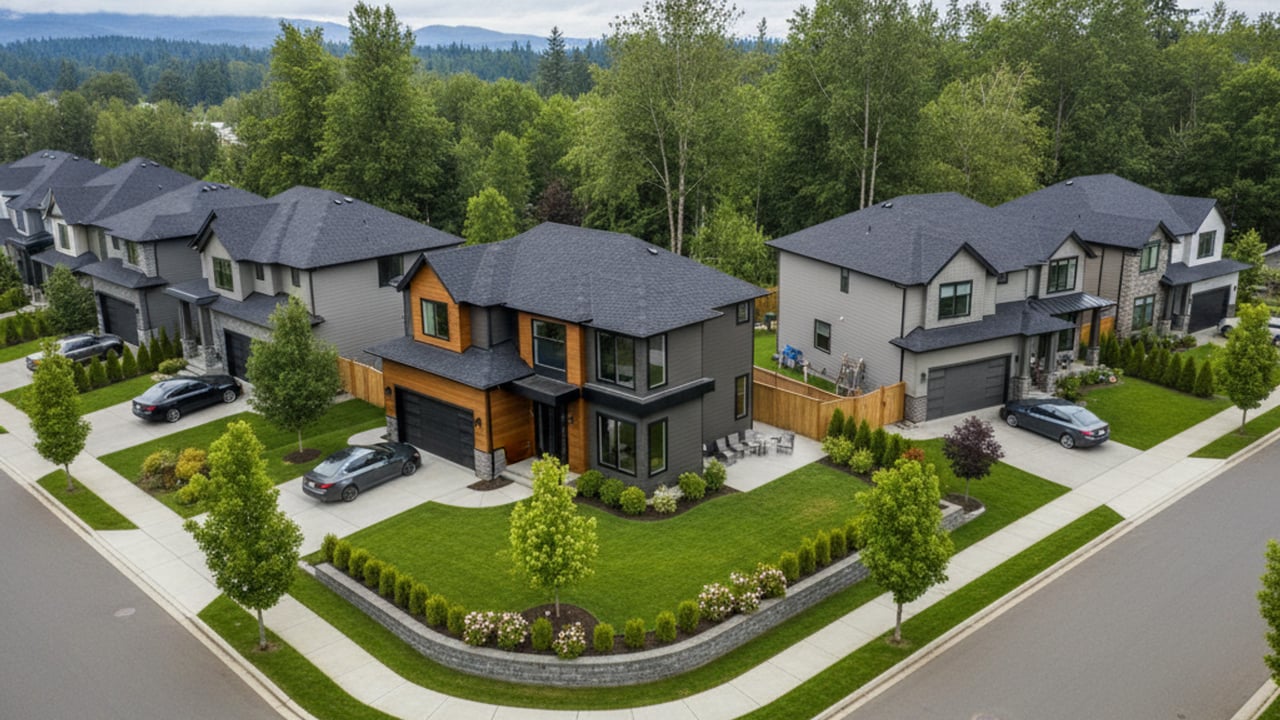
Vancouver feels much more suburban, with a higher volume of new construction and planned subdivisions. You are far more likely to find ranch-style homes, cul-de-sacs, and larger lots here. For buyers who prioritize square footage, move-in ready condition, and modern amenities like air conditioning, the Vancouver real estate market often provides more inventory.

The waterfronts also highlight the difference in development styles. Portland’s waterfront is a mix of industrial history and public parks, often hosting festivals and markets. Vancouver has recently developed a high-end, modern waterfront district with sparkling new condos, restaurants, and wineries that feels significantly more polished and upscale than its neighbor.

Commuting and Transportation: The Bridge Factor

If you plan to live in one state and work in the other, you must respect the river crossing. The Columbia River is massive, and there are only two main ways across: the I-5 Interstate Bridge and the I-205 Glenn Jackson Bridge.

These bridges are regional bottlenecks that dictate the daily rhythm of thousands of commuters. Traffic flow is directional and heavy; it jams up southbound into Portland during the morning rush and clogs up northbound into Vancouver in the evening. During peak hours, a drive that should take 20 minutes can easily stretch to 45 or even 90 minutes.

Public transit options vary depending on your preference for rail or rubber tires. Portland boasts the extensive MAX light rail system and streetcars that connect many neighborhoods. Vancouver relies on C-TRAN buses, which are clean and reliable, offering express commuter routes directly into downtown Portland for those who want to skip the driving.

Looking ahead, the commute landscape is set to change with the Interstate Bridge Replacement Program. While the new bridge is still years away, travelers should be aware that tolling on the existing I-5 bridge is expected to begin in Spring 2027. This will add a new daily cost for cross-river commuters that needs to be factored into any long-term budget.

Lifestyle and Culture: Weird vs. Relaxed

The cultural vibe is where the "Portlandia" stereotypes meet reality. Portland prides itself on its "Keep Portland Weird" motto, offering a landscape filled with indie shops, sprawling food cart pods, and a very active nightlife. It is a city with a progressive, activist heart, where community involvement and distinctive self-expression are the norms.

Vancouver, by contrast, offers a quieter and more relaxed pace that feels distinctly suburban. It is often described as more family-oriented, with a focus on neighborhood gatherings and outdoor activities. While it used to be considered a sleepy bedroom community, it is rapidly developing its own identity, anchored by the dining and wine tasting scenes at the new waterfront.

Food lovers will find plenty to love in both spots, though the scale differs. Portland is undeniably a world-class food city with endless variety and innovation. However, the dining scene in Vancouver has improved dramatically, offering high-quality restaurants without the hour-long wait times you might find on Mississippi Avenue or Division Street.

Perceptions of cleanliness and street safety also diverge here. Vancouver is generally perceived as cleaner, with fewer visible homeless encampments in its commercial districts compared to downtown Portland. While both cities face modern urban challenges, the visible impact is less pronounced on the Washington side.

Schools, Parks, and Community Safety

When looking at the foundational elements of community life, both cities offer strong but different amenities.

Families often gravitate toward Vancouver for its newer school facilities and robust athletic programs. The school districts here are a major draw for relocating buyers. Portland offers a wide mix of educational options, including highly rated magnet programs and language immersion schools, though the physical infrastructure of the buildings can vary greatly by neighborhood.

For outdoor enthusiasts, access to nature is excellent regardless of your zip code. Portland is home to Forest Park, one of the largest urban forests in the country, providing miles of hiking trails within city limits. Vancouver offers incredibly easy access to the Columbia River Gorge for weekend adventures, as well as numerous local lakes and community parks.

Regarding safety, it is best to look at neighborhood-specific data rather than broad generalizations. Portland faces more big-city challenges regarding property crime, which is a common topic of conversation among locals. Vancouver typically feels safer to many residents, but like any growing city, it has pockets with higher crime rates and areas that are very quiet.

Verdict: Should You Move to Portland or Vancouver?

Deciding between these two comes down to what you value most in your daily life and your bank account. There is no single "better" option, only the option that fits your specific lifestyle.

Choose Portland if:

  • You crave walkability, historic architecture, and a vibrant nightlife scene right outside your door.

  • You want to be in the middle of the "weird" culture and world-class food scene.

  • You don't mind paying income tax in exchange for lower property tax growth and no sales tax.

Choose Vancouver if:

  • You are looking to save significantly on income tax (especially if you work in WA or remotely).

  • You prefer newer homes, larger lots, and a quieter, more suburban pace of life.

  • You want a cleaner, more predictable daily environment while still being close to the big city action.

Ultimately, the drive between them is short when traffic is light. Whether you choose the bustling streets of Portland or the riverside calm of Vancouver, you are close enough to enjoy the best of both worlds.

Frequently Asked Questions

Is it cheaper to live in Portland or Vancouver WA?

Generally, Vancouver is cheaper, largely due to the lack of state income tax and slightly lower housing costs. However, the gap is closing, and if you work physically in Oregon, the tax benefits of living in Washington diminish significantly.

Do I have to pay Oregon income tax if I live in Vancouver WA?

If you physically commute to a job located in Oregon, yes, you must pay Oregon income tax on those earnings. If you live in Vancouver and work remotely from home for an Oregon company, you are typically exempt from Oregon income tax, which is a major financial advantage.

Is there a toll bridge between Portland and Vancouver?

Currently, there are no tolls on the bridges crossing the Columbia River. However, tolling on the I-5 bridge is planned to begin in Spring 2027 to help fund the bridge replacement project.

Is the commute from Vancouver to Portland really that bad?

During rush hour, yes, the commute can be very difficult, often turning a short drive into an hour-long ordeal due to the bridge bottlenecks. If you drive off-peak or on weekends, the trip is quick and easy, taking only about 15 to 20 minutes.

Which city has better weather, Portland or Vancouver?

The weather is essentially identical since they are only separated by a river. Vancouver can sometimes feel slightly cooler or breezier because of the wind coming off the Columbia River, but you will experience the same rainy winters and beautiful summers in both cities.

Follow Us On Instagram