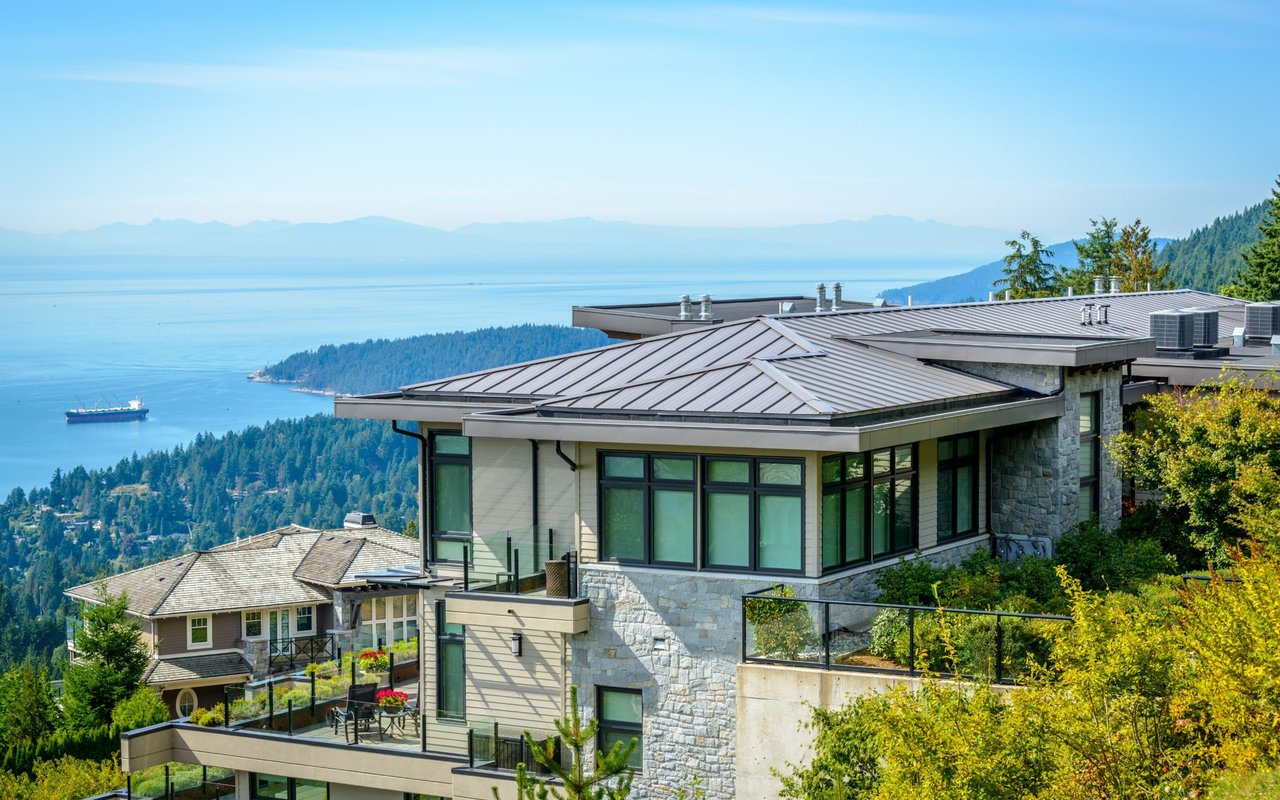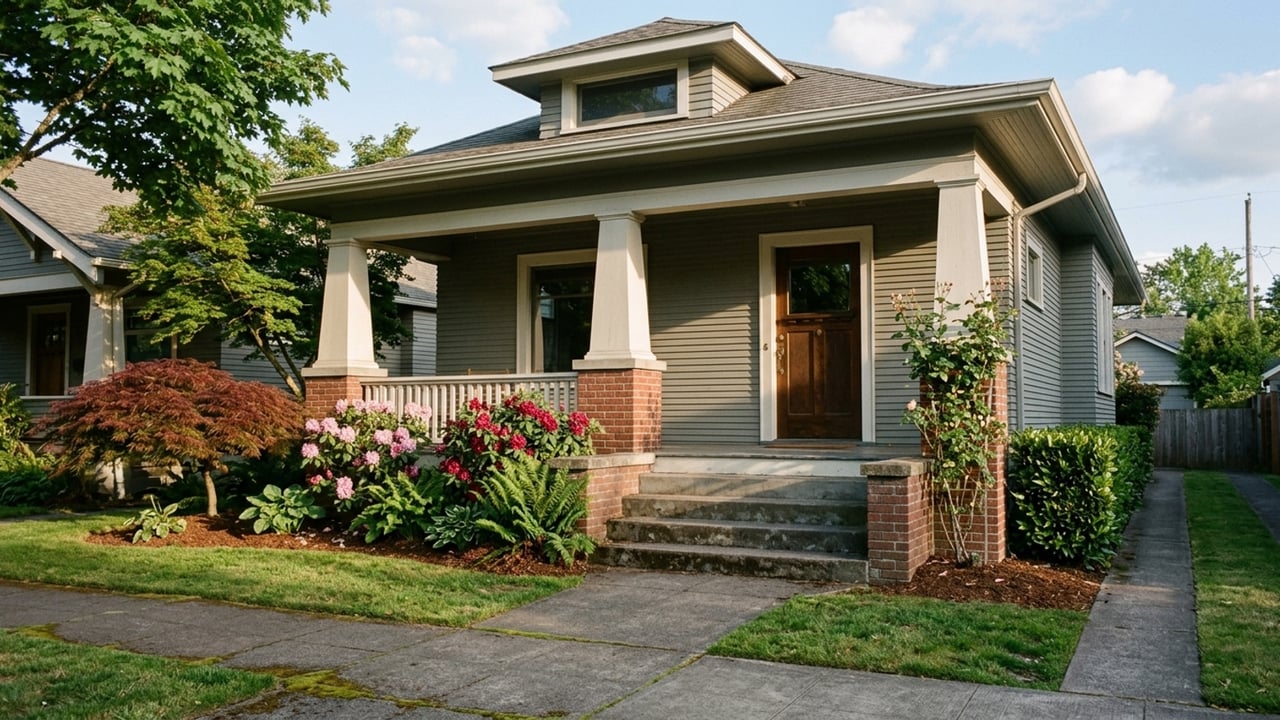
Portland, OR sits in Multnomah County with a population somewhere between 630,000 and 645,000 residents. Anyone buying a home in Portland, OR will find it to be the economic and cultural center of the region - a place that draws people in with an established tech industry and a neighborhood layout unlike most American cities.
If you're thinking about moving here, you'll need to get comfortable with a specific housing market, a cost of living that runs well above the national average, and some crime statistics that are trending in the right direction but still worth understanding. This isn't a city you should move to on vibes alone.
An Overview of the Portland Area
The city breaks down into six geographic quadrants - Northeast, Southeast, Northwest, Southwest, North, and South - and within those boundaries you'll find close to 100 distinct neighborhoods. Each one has its own commercial corridors and housing stock. They don't all look or feel the same, which is either Portland's greatest quality or its most confusing feature, depending on your tolerance for variety.
The region goes by the nickname "Silicon Forest," and it's earned. A heavy concentration of tech and electronics firms operate here alongside major healthcare networks, and a lot of residents commute across quadrants or out to nearby suburbs to reach them.
Geography and Major Employers
Oregon Health & Science University is the region's largest employer, with over 20,800 workers. Providence Health & Services follows with more than 19,200 employees, and Legacy Health and Kaiser Permanente also employ tens of thousands in the local healthcare sector.
Tech and manufacturing fill out the rest of the picture. Intel runs roughly 17,600 employees in nearby Hillsboro and Aloha. Nike is headquartered in Beaverton with 10,500 workers. Amazon employs about 11,000 people locally. Fred Meyer Stores adds around 9,000 more.
Getting Around the Quadrants
Downtown Portland - the walkable urban core along the Willamette River - is where you'll find Portland State University and the Portland Art Museum, among other centralized employers. Across the river in Vancouver, WA, PeaceHealth employs just under 5,000 people.
Knowing which quadrant your job is in matters more than it might in other cities. Your commute time will hinge on it, and so will your housing search.
Cost of Living and Real Estate Prices
The Council for Community and Economic Research (C2ER) puts Portland's cost of living index at 119.3. That means it costs about 19.3% more to live here than the national average, and housing is doing most of the heavy lifting - running 33% to 45% above the United States baseline. Other consumer indices put the overall gap somewhere between 15% and 25% above average, depending on methodology.
Either way, your dollar goes less far here than it would in most Midwestern or Southern cities. That's not a warning, it's just math you should run before you sign anything.
Home Prices and Market Speed
The median sale price for a home in Portland, OR currently sits at about $524,653. Homes are moving fast - a median of 19 days on market before going under contract.
Available inventory hovers around 2,215 listings with about three months of supply. The average sale-to-list ratio is just over 100%, which tells you that sellers aren't leaving money on the table. Plenty of homes close above asking.
Everyday Expenses
Housing isn't the only line item that adds up. Groceries, utilities, and transportation all carry a premium here. Renters feel it too - high property values translate directly into lease rates.
If you're relocating from a lower-cost market, compare your current salary to what local employers are paying before you assume the move pencils out.
Analyzing the Crime Rate
Portland's overall FBI-based crime rate sits at roughly 6,246.4 incidents per 100,000 people - about 195% above the national average. Property crime, covering burglary, larceny, and car theft, accounts for the bulk of that number. The violent crime rate is approximately 720.1 per 100,000 residents, about 100% above the national baseline.
Those are real numbers and worth sitting with. But the direction of travel has changed.
Recent Reductions in Offenses
In the first half of 2025, homicides dropped 51% compared to the same period the prior year - from 35 incidents down to 17. Overall violent crime fell 17% during that window. Aggravated assaults were down 18%, sexual assault reports declined 12%, and robberies dropped 10%.
That's a meaningful shift, and it's worth acknowledging.
Property Crime Considerations
Violent crime trending down doesn't change the property crime picture as much. Car theft and larceny are still driving a high overall crime index, and most residents here will tell you the same practical things: lock your car, don't leave anything visible on the seat, secure your home.
Buyers often pull neighborhood-specific statistics because the numbers vary considerably from one quadrant to another. That's worth doing before you settle on a target area.
Population Details and Community Setup
Most estimates put Portland's population between 630,000 and 645,000 - one 2026 cost-of-living source cites a figure of 642,715 for the city proper. The broader metro extends well beyond that into suburbs that add hundreds of thousands more to the daily commuter pool.
Density shifts depending on where you are. Hazelwood, for example, recorded 26,653 residents in the 2020 Census, making it the city's second-most populous neighborhood.
Total Residents and County Lines
Multnomah County covers most of the city's primary residential zones. Move slightly west or south, though, and you'll cross into Washington or Clackamas County - a distinction that matters for taxes, school districts, and local services.
Popular Corridors and Districts
The Pearl District is the former industrial area that became a hub for lofts, galleries, and design-forward retail. NW 23rd Ave - known locally as Nob Hill - is an upscale shopping street with boutiques running several walkable blocks.
On the east side, the Alberta Arts District in the Northeast quadrant features murals and an arts-forward commercial strip. Hawthorne Boulevard and Belmont Street are the go-to corridors in the Southeast for counterculture shopping and dining. Each of these areas has a distinct personality, and most buyers end up drawn to one or two before they even start looking at listings.
Weighing the Pros and Cons
Every market has trade-offs, and Portland's are pretty clear-cut. The employment base in tech and healthcare is substantial - Intel, Nike, OHSU, Amazon - and the neighborhood variety is genuinely unusual. You can find a walkable, character-filled street in almost any quadrant.
The financial side is harder to soften. A cost of living nearly 20% above the national average isn't casual. It requires real income to stay comfortable, and the real estate market doesn't give you much time to think.
The Main Benefits
The Silicon Forest economy provides high-paying jobs in technology and manufacturing, and the healthcare network is one of the largest in the Pacific Northwest. Neighborhoods like Sellwood-Moreland - a tree-lined riverside area - offer the kind of walkable, localized living that's genuinely hard to find in cities this size.
The quadrant system, once you understand it, makes daily life easier. Most residents can find shopping, dining, and services without heading downtown.
Drawbacks to Consider
The $524,653 median home price is the number that stops most buyers mid-conversation. Pair that with homes selling in a median of 19 days, and you don't get a lot of room to be leisurely about your decision-making.
Property crime remains high relative to national averages. The improvement in violent crime stats is real, but car thefts and burglaries are still part of daily life for a lot of residents here.
Lifestyle and Daily Amenities
Downtown Portland runs along the Willamette River and functions as the city's cultural and civic core - Portland State University, the Portland Art Museum, regional events. It's walkable in a way that downtown areas in a lot of comparably sized cities aren't.
Outside downtown, the neighborhoods operate more like independent small towns. Each quadrant has its own main streets with local restaurants, groceries, and businesses. You can spend a weekend entirely in your own corner of the city without feeling like you're missing something.
Recreation and Cultural Sites
The Portland Art Museum anchors the downtown arts scene and draws visitors from across Multnomah County. Laurelhurst Park sits at the center of the Laurelhurst neighborhood, surrounded by vintage homes. The Willamette River runs through the middle of everything, providing waterfront paths and parks that residents in Sellwood-Moreland and Downtown use regularly.
Dining and Shopping Hubs
NW 23rd Ave covers the upscale end of retail. Hawthorne Boulevard handles the independent, eclectic side. The Alberta Arts District mixes dining with local art in a mural-lined setting, and the Pearl District brings high-end dining into repurposed industrial spaces. Day-to-day needs are covered too - Fred Meyer Stores operates throughout the city with roughly 9,000 employees keeping those locations running.
Retirement and Senior Living
The healthcare infrastructure here is a legitimate selling point for older adults. With Providence Health & Services, Legacy Health, and OHSU all operating locally, access to specialists isn't a logistical problem the way it can be in smaller markets. The parks and relatively mild climate help too.
Single-story homes and accessible condos in walkable districts tend to be what downsizing buyers are after. The city's neighborhoods can accommodate that, but the price point and pace of the market don't get easier just because you're buying something smaller.
Retiring in the Metro Area
The $524,653 median home price applies whether you're buying a four-bedroom or a one-bedroom condo. Downsizing buyers should expect to move quickly when a listing fits their needs.
The quadrant layout makes it reasonable to narrow your search to areas that match the pace and lifestyle you're looking for. Neighborhoods like Nob Hill and Sellwood-Moreland give retirees the option to reach shops and cafes on foot.
Frequently Asked Questions
What is the cost of living in Portland, OR?
Portland's cost of living runs about 19.3% above the national average, according to the C2ER index. Housing is the primary driver, costing 33% to 45% more than the United States baseline.
What is the crime rate in Portland, OR, and is it safe?
The overall crime rate sits roughly 195% above the national average, driven largely by property crime. Violent crime dropped 17% in the first half of 2025, and homicides fell 51% over that same period compared to the prior year.
What are the pros and cons of living in Portland, OR?
The job market is strong, anchored by major employers like OHSU, Intel, and Nike, and the neighborhoods are genuinely distinct and walkable. On the other side, housing costs are high and property crime remains above national averages.
Is Portland, OR a good place to live for families or retirees?
It depends on your budget and what you're prioritizing. Retirees benefit from the extensive local healthcare network - Providence Health & Services chief among them - but the $524,653 median home price requires careful financial planning regardless of life stage.
What county is Portland, OR in and where is it located?
Portland sits primarily in Multnomah County in the Pacific Northwest, along the Willamette River, divided into six geographic quadrants.
How do I choose between Portland and Beaverton?
Buyers often weigh the city against nearby suburbs where major employers like Nike are headquartered. A comparison between Portland and Beaverton usually comes down to commute times and whether you prefer an urban quadrant or a suburban environment.
Where do older adults tend to live in the city?
Downsizing buyers often look for accessible condos or single-story homes in walkable districts like Nob Hill and Sellwood-Moreland. Finding suitable retirement communities in Portland requires moving quickly, as inventory typically goes under contract in a median of 19 days.