Portland vs. Beaverton: Choosing Your Ideal Pacific Northwest Base
For anyone looking to move to the metro area, the choice often comes down to a classic dilemma: Do you want the vibrant, walkable energy of the city core, or do you prefer the space and convenience of the immediate suburbs?
It’s a conversation I have with clients constantly. They sit down with a coffee and ask, "Where should I actually land?" Geographically, Portland and Beaverton are neighbors, separated largely by the West Hills. Beaverton sits just about 7 miles west of downtown Portland, but crossing that county line changes your daily lifestyle, your commute, and yes—your tax bill.
Portland is the urban heart, known for its distinct neighborhoods like the Pearl District or Hawthorne. Beaverton, on the other hand, is the anchor of the Silicon Forest, offering newer housing stock and proximity to major tech employers like Nike and Tektronix.
If you are working through your moving to Oregon checklist, here is a breakdown of how these two heavyweights compare.
Cost of Living & Housing Market Comparison
Let’s start with the numbers, because while these two cities are close on the map, your money goes a little differently in each.
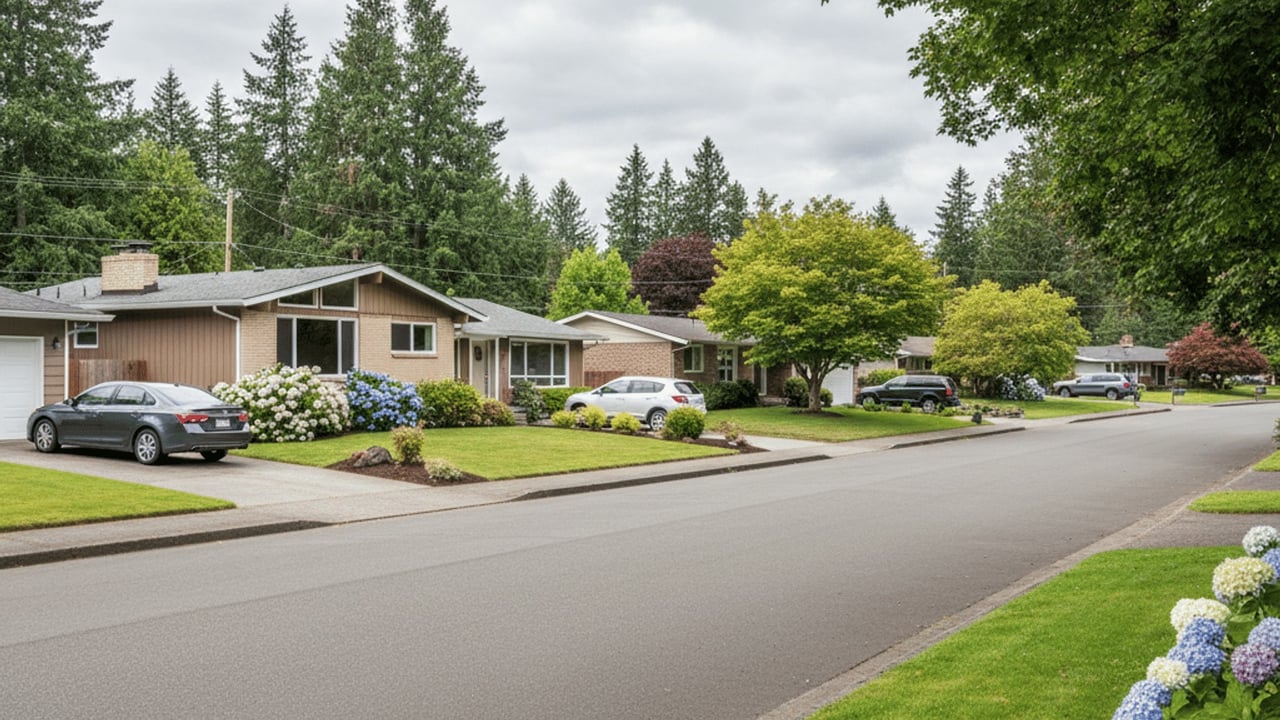
In general, Portland real estate carries a location premium. You are paying for the zip code, the historic architecture, and the walkability. Beaverton isn't necessarily "cheap"—it is a highly desirable area—but it often offers better value in terms of square footage and lot size. You might find a mid-century ranch or a new build in Beaverton for the same price as a smaller bungalow in a hot Portland neighborhood.
When it comes to monthly expenses, the gap widens a bit more. Rental rates in Beaverton are typically $300 to $400 lower per month for units comparable to what you’d find in Portland. Utilities also tend to run slightly cheaper (around 10%) for Beaverton residents.
Here is a quick look at what buyers and renters often see on the ground:
-
Median Home Price: Both markets hover in the mid-$500Ks to $600K range, but you typically get more amenities and newer construction in Beaverton.
-
Rent: A standard 2-bedroom apartment averages around $2,200 in Portland versus closer to $1,800 in Beaverton.
-
Property Taxes: Base rates are similar (~1.08% in Multnomah vs. ~1.11% in Washington County), but as we’ll discuss next, the income tax layer is where things get interesting.
The Tax Gap: Multnomah vs. Washington County
If you are a high earner or comparing your total cost of living in Portland versus the suburbs, you cannot ignore the tax structure. This is often the deciding factor for my clients transferring here for executive or tech roles.
Income Tax Differences
Portland lies in Multnomah County, while Beaverton is in Washington County. Multnomah County voters have approved specific income tax measures that Washington County residents generally do not pay.
-
Preschool for All: This is a tax of 1.5% on taxable income over $125K for individuals (or $200K for joint filers).
-
Supportive Housing Services (SHS): This is a 1% tax on taxable income above similar thresholds ($125K/$200K). While this is a Metro-wide bond, the application and specific jurisdictional boundaries can vary, and Multnomah County residents often feel the heaviest impact of local levies.
The Arts Tax
There is also a quirk specific to the city limits of Portland: the Arts Tax. Every adult resident in Portland pays a flat annual fee of $35 to support arts education and access. It’s a small amount compared to the income taxes above, but it’s something Beaverton residents don't have to file.
For households with significant income, moving just across the county line to Beaverton can result in meaningful annual savings on capital gains and income tax liability.
Lifestyle & Vibe: Urban Core vs. Suburban Mix
Beyond the spreadsheet, what does it actually feel like to live here?
Portland is defined by its pockets of culture. If you love walking out your front door to find a food cart pod, a vintage boutique, or an indie theater, you want to explore Portland neighborhoods. The vibe is eclectic, historic, and very pedestrian-friendly. Areas like the Pearl District or Alberta Arts District offer a lifestyle where you might not need to start your car all weekend.
Beaverton offers a different kind of charm. It’s quieter and follows a more traditional suburban layout, but don't let the "suburb" label fool you into thinking it's boring. Beaverton has quietly become a culinary powerhouse. It is famous for "strip mall gems"—unassuming plazas that house some of the best authentic Korean, Indian, and Middle Eastern cuisine in the state.
Recreation is also massive in Beaverton, thanks largely to the Tualatin Hills Park & Recreation District (THPRD). Their facilities—pools, sports complexes, and nature centers—are a major draw for residents who want accessible, high-quality amenities.
Commuting & Employment Hubs
Your commute depends entirely on which side of the West Hills you work on. The "Silicon Forest" isn't just a nickname; major employers like Nike (World HQ), Intel, and Tektronix are firmly planted on the west side in Beaverton and Hillsboro.
If you work at Nike, living in Beaverton is a no-brainer—you might even be able to bike to work. If you work at OHSU or in city government, a Portland address makes more sense.
Here is the logistical breakdown:
-
The Highway 26 Factor: The Sunset Highway (Hwy 26) is the main artery connecting the two cities. During rush hour, the tunnel through the West Hills is a major choke point. The "reverse commute" (living in Portland, working in Beaverton) is popular, but it still faces congestion.
-
Public Transit: The MAX Light Rail is excellent here. The Blue and Red lines connect Beaverton Transit Center directly to Pioneer Courthouse Square in downtown Portland. It’s a reliable 25-minute ride that lets you skip the parking fees.
-
Walkability: Portland wins on walk and bike scores. Beaverton is more car-dependent, though the city has been aggressively adding trails and bike lanes to connect neighborhoods.
Education, Parks, and Community Amenities
When looking at long-term value and quality of life, access to schools and green space is top of mind for many buyers.
School Districts: The Beaverton School District is the third-largest in Oregon. Because of its size, it offers a wide variety of specialized programs and diverse course options that smaller districts might not support. Portland Public Schools is a large, complex district where the experience can vary significantly from one neighborhood cluster to another.
Parks and Outdoors: Portland boasts Forest Park, one of the largest urban forests in the country at 5,200 acres. It’s a true wilderness experience inside the city limits. Beaverton answers with the Tualatin Hills Nature Park and a slightly easier drive to the Oregon Coast. Because Beaverton sits west of the city traffic, you are about 20 minutes closer to Cannon Beach on a Friday afternoon.
Summary: Pros and Cons at a Glance
If you are scanning this over breakfast, here is the quick tradeoff list:
Portland
-
Pros: Incredible walkability, vibrant nightlife, historic home styles, direct access to major cultural events.
-
Cons: Higher tax burden (Multnomah County), parking can be difficult, higher density means more noise.
Beaverton
-
Pros: Generally lower tax burden (Washington County), newer homes with A/C and garages, close to Nike/Intel, free parking almost everywhere.
-
Cons: High car dependency, less traditional nightlife, the "strip mall" aesthetic isn't for everyone.
Which City Fits Your Lifestyle?
Ultimately, there is no "better" city, just the one that fits your budget and daily rhythm.
If you prioritize tax savings, newer construction, and want a shorter commute to the tech corridor, looking at Beaverton homes is likely your best move. You get more space and excellent community recreation centers.
However, if you thrive on energy, want to walk to your morning coffee, and value the charm of a 1920s craftsman over a 2000s traditional, you should stick to the Portland real estate market trends. The premium you pay is for the lifestyle of having the city at your doorstep.
If you’re still on the fence, I always recommend seeing a few homes in both areas on the same day. It usually becomes clear very quickly which side of the tunnel feels like home.
Frequently Asked Questions
Is it cheaper to live in Portland or Beaverton?
Generally, Beaverton is more affordable regarding monthly cash flow. While home purchase prices are similar, Beaverton typically has lower rent (by $300–$400/month) and lower income taxes for high earners compared to Portland.
How long is the commute from Beaverton to Portland?
It depends heavily on the time of day. Without traffic, it’s a quick 15–20 minute drive. However, during rush hour on Highway 26, that drive can easily stretch to 35–50 minutes.
Do I pay different taxes in Beaverton vs. Portland?
Yes. Portland is in Multnomah County, which has specific income tax levies (like Preschool for All and Supportive Housing services) that can impact high earners. Beaverton is in Washington County, which generally has a lower overall tax burden for those households.
Is Beaverton considered a suburb of Portland?
Yes, Beaverton is Portland’s major neighbor to the west. While it is a distinct city with its own government, economy, and large employers like Nike, it is part of the greater Portland metropolitan area.
Does the MAX train go to Beaverton?
Yes, the MAX Light Rail is very accessible in Beaverton. Both the Blue and Red lines service the area, providing a reliable connection to downtown Portland and the airport.