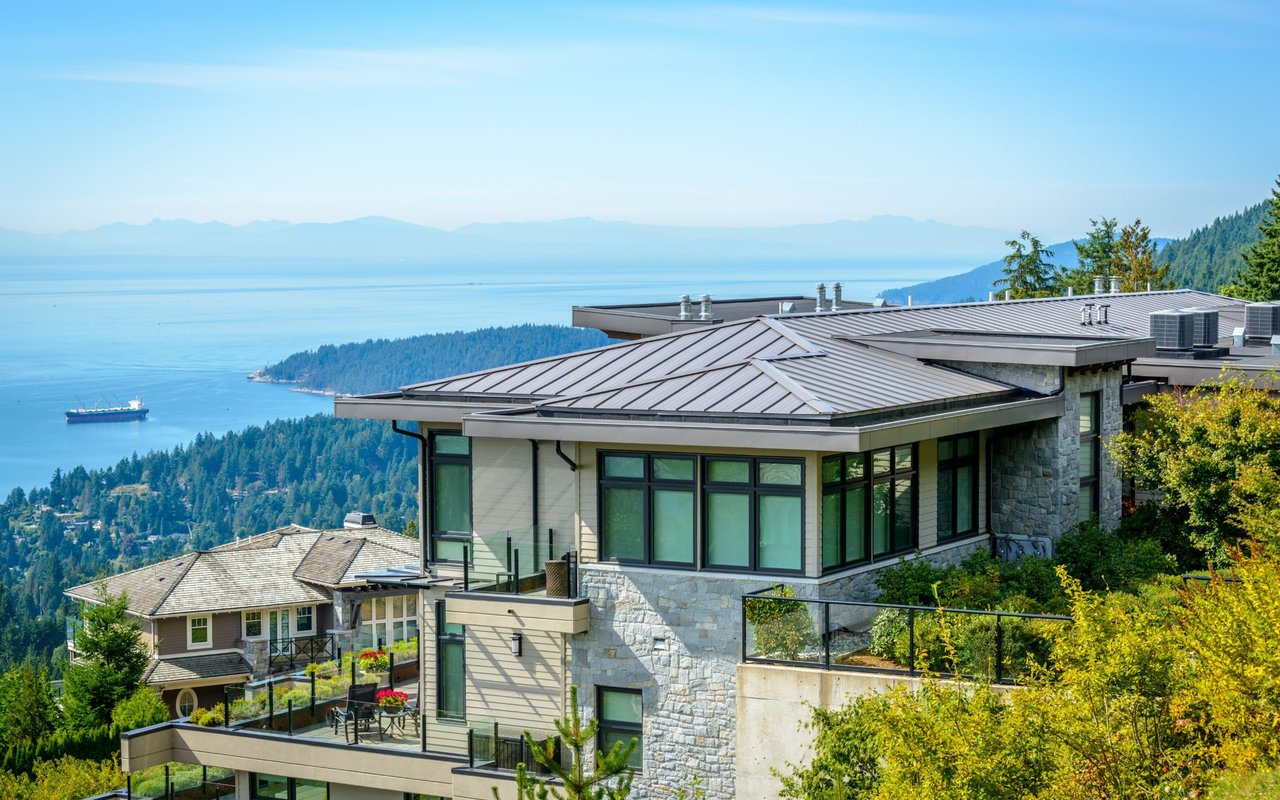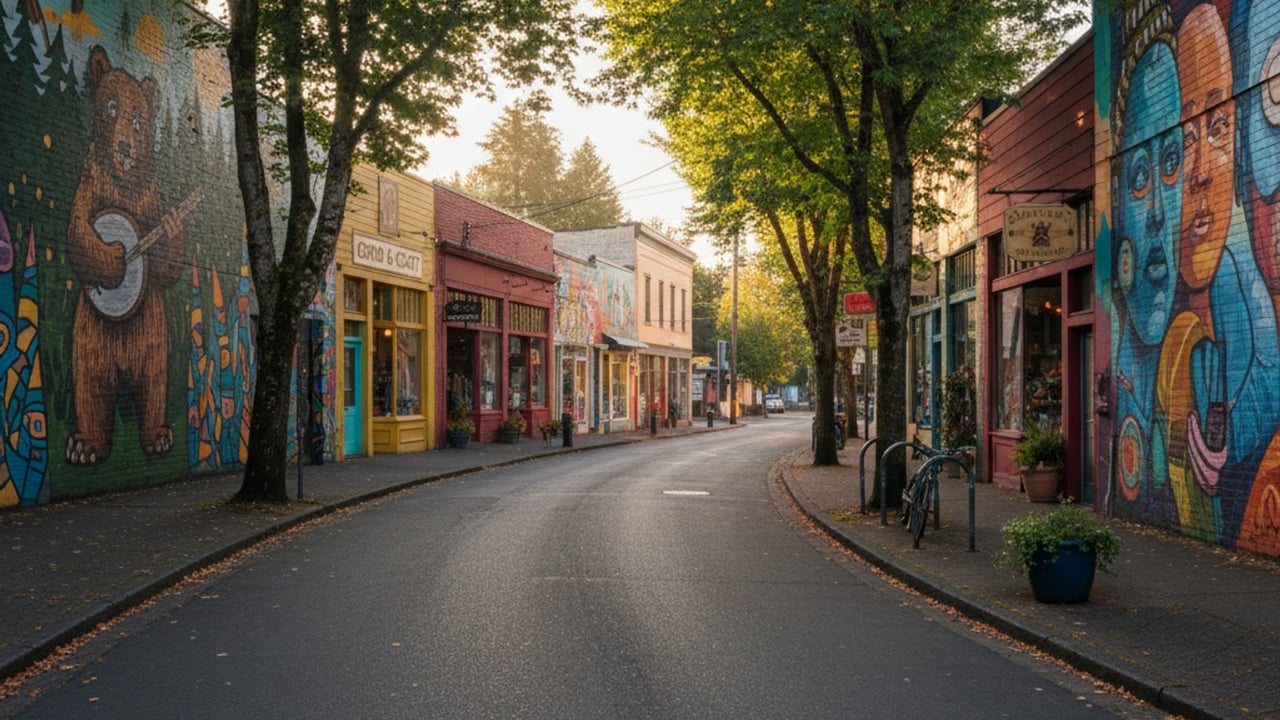
If you ask a local to describe Northeast Portland, you might get two very different answers. One person might describe wide, quiet streets lined with massive trees and century-old mansions. Another might talk about vibrant murals, street fairs, and funky boutiques where the energy stays high late into the evening.
The truth is, Northeast Portland is both. It is arguably the most eclectic quadrant of the city, offering a "best of both worlds" scenario for homebuyers. You have the historic prestige of neighborhoods like Irvington and the gritty, artistic creativity of the Alberta Arts District - often within walking distance of each other. Situated perfectly between the bustle of Downtown and the convenience of Portland International Airport (PDX), this area draws everyone from first-time buyers to luxury estate seekers.
Whether you are looking for homes for sale in Northeast Portland or just trying to figure out where to grab the best brunch, this guide breaks down what life is really like in this massive slice of the city.
Geography & Boundaries: Defining Northeast Portland
Before we look at houses, we need to look at a map. Portland geography can be a little confusing for newcomers, specifically when it comes to the difference between "North" and "Northeast."
Technically, Northeast Portland sits north of East Burnside Street and east of North Williams Avenue. The Willamette River forms the western edge near the Moda Center, while the Columbia River caps the northern border.
Locals usually split the quadrant into two distinct zones: "Inner Northeast" and "Outer Northeast." The dividing line is generally accepted to be around 42nd Avenue or 50th Avenue. Inner NE feels more urban and historic, featuring the classic Portland grid system. As you move to Outer NE, the streets get a bit wider, the lots get bigger, and the vibe shifts from streetcar-era density to mid-century spaciousness.
The Vibe: Culture, Dining, and Things to Do
If lifestyle is your main driver, Northeast Portland delivers. This quadrant is defined by its "commercial corridors" - vibrant streets that act as the living room for the surrounding residential pockets.
The most famous of these is the Alberta Arts District along Alberta Street. It is the cultural heartbeat of the quadrant, known for the "Last Thursday" street fair, incredible mural art, and independent boutiques. Just a short drive away, the Hollywood District offers a different feel, anchored by the historic Hollywood Theatre - a restored movie palace that is a point of pride for the community.
For foodies, the options are endless. You have the dining corridors of Williams Avenue and Mississippi Avenue (which straddles the North/Northeast border), offering everything from high-end farm-to-table experiences to casual brewpubs. If you prefer a more casual vibe, you can visit pods like the Rose City Food Park.
Entertainment here isn't just about food. You can catch a Blazers game at the Moda Center or spend an afternoon soaking in the history at McMenamins Kennedy School - an old elementary school converted into a hotel, movie theater, and soaking pool complex.
Top Neighborhoods in Northeast Portland
Because the quadrant is so large, the "vibe" changes block by block. Here is a look at some of the most sought-after neighborhoods to help you narrow your search.
Irvington & Alameda
If you love architecture, this is where you look. Irvington and the Alameda Ridge are known for affluence and history. You will find grand properties here, often sitting on oversized lots with views of the city or river. It is quiet, established, and strictly residential, yet just minutes from the city center.
Beaumont-Wilshire
This area centers around "Beaumont Village" on Fremont Street. It has a very strong community feel with local bakeries, shops, and hardware stores that residents can walk to easily. The housing stock here is a charming mix of English Cottages and Bungalows.
Concordia & King
Located near the Alberta Arts District, Concordia has a younger, more energetic energy. It is a mix of long-time residents and new buyers renovating older bungalows. It is less polished than Irvington but offers immediate access to nightlife and culture.
Laurelhurst
Laurelhurst feels like a fairy tale. The streets curve around a central roundabout and the massive Laurelhurst Park. It is a designated historic district, meaning the neighborhood character is fiercely protected.
Cully & Roseway
Moving into Outer NE, neighborhoods like Cully and Roseway offer more breathing room. These areas are popular for buyers who want more land for gardening or a lower price point than the inner core. You will see more mid-century ranch styles here compared to the vertical architecture of the inner neighborhoods.
Northeast Portland Real Estate & Housing Stock
The real estate market in Northeast Portland is as diverse as its residents. The architecture tells the story of the city's expansion.
In Inner NE, the housing stock is heavily focused on early 20th-century styles. You will see row after row of Craftsman Bungalows, Old Portland Foursquares, and majestic Tudors. These homes often feature big front porches, built-ins, and basements.
As you move east past 50th Avenue, the architecture transitions. The grid loosens up, and you start seeing Mid-Century Ranches, Cape Cods, and split-levels. These homes often offer "one-level living," which is a huge draw for many buyers.
Price points vary significantly. Inner NE neighborhoods like Irvington command premium pricing ($$$), often well over the city average. Areas like Roseway or Cully generally offer more entry-level value ($$), though prices have risen steadily as more people discover the benefits of Outer NE. You will also notice a lot of ADUs (Accessory Dwelling Units) and infill development, as homeowners maximize the potential of the deep lots common in this quadrant.
Crime Rates & Safety in Northeast Portland
A common question for anyone relocating is: "Is it safe?" The answer in Northeast Portland, like any major city, depends heavily on exactly where you are standing.
Safety statistics vary by neighborhood. Residential enclaves like Alameda, Irvington, and Beaumont-Wilshire consistently rank as some of the safest and quietest areas in the city. Violent crime in these residential pockets is generally low.
However, activity tends to be higher near major thoroughfares like 82nd Avenue or around large commercial hubs like the Lloyd Center. Property crime, such as car theft or break-ins, is the most common issue reported across the city. When looking at homes, it is smart to visit the street at different times of day to get a true feel for the environment.
Commute, Transit, and Getting Around
One of the biggest selling points for living in Northeast Portland is the logistics. It is simply easy to get places from here.
Proximity to PDX is a massive advantage. For frequent travelers, living in NE means you can often get from your driveway to the terminal in under 20 minutes.
Public transit is robust. The MAX Light Rail (Blue, Red, and Green lines) services the southern edge of the quadrant, with major hubs at the Lloyd Center and Hollywood Transit Center.
If you prefer two wheels, this area is a cyclist's dream. The quadrant is dense with "Neighborhood Greenways" - streets like Tillamook giving priority to bicycles over cars. For drivers, access to I-84 allows for a quick zip into Downtown or an easy escape east toward the Columbia River Gorge for weekend hiking.
Schools and Education
For households focused on education, Northeast Portland is served primarily by Portland Public Schools (PPS).
The area is home to several notable institutions. Grant High School, located in the heart of Grant Park, recently underwent a massive modernization and renovation, making it a centerpiece of the community. Jefferson High School is another key institution with deep roots in the area's history.
For higher education, the quadrant offers easy access to downtown universities, and the former Concordia University campus remains a significant landmark in the neighborhood, currently undergoing transition for new educational or community uses.
Frequently Asked Questions
Is Northeast Portland safe?
Safety is relative and varies by block. Inner residential neighborhoods like Irvington and Alameda are generally very safe and quiet. However, you should exercise standard urban caution in busy commercial areas like the Lloyd District or along major arterials like 82nd Avenue.
What is the difference between North and Northeast Portland?
While they sit next to each other, locals treat them as different quadrants. North Portland generally refers to the peninsula (St. Johns, Kenton), while Northeast Portland is the land mass east of North Williams Avenue.
What are the best neighborhoods in Northeast Portland for walkability?
If you want to walk to coffee and groceries, look at Irvington, the Hollywood District, or the areas surrounding Alberta Street. Beaumont-Wilshire is also fantastic for walkability due to the concentration of shops on Fremont Street.
How far is Northeast Portland from downtown?
It is very close. From Inner NE, you are looking at a 10 to 15 - minute drive across the Steel or Burnside Bridge. If you are taking the MAX or biking, you can usually reach downtown in about 20 minutes.