When people talk about Portland, they often picture the neatly divided quadrants of Southeast or Northwest. But North Portland—affectionately known by locals as "NoPo"—dances to its own beat. Geographically, it is a peninsula formed by the confluence of the Willamette and Columbia Rivers, giving it a distinct, almost island-like atmosphere compared to the rest of the city.
Locals still call it the "Fifth Quadrant," a nickname that stuck long before the city officially updated its mapping system to include a sixth zone. If you are looking for a community that blends a gritty industrial history with a small-town vibe and incredible access to nature, living in North Portland might be exactly what you’re looking for. It’s a place where you can watch a massive cargo ship pass under a gothic bridge in the morning and catch a college soccer game in the afternoon.
Geography and History: From Vanport to Today
To understand the real estate and vibe here, you have to understand the layout. North Portland sits west of I-5 and north of the Fremont Bridge, wrapped on three sides by river water. Because it is somewhat separated from the central city by the freeway and the rail yards, it has developed a strong sense of independence.
The area is deeply shaped by the history of Vanport. Once the second-largest city in Oregon, Vanport was a diverse housing project built for shipyard workers during WWII that was destroyed by a massive flood in 1948. That history is woven into the fabric of the community today, influencing the area's diversity and resilience.
Currently, the landscape is a fascinating mix. You have heavy industrial zones along the riverbanks—vital for the city's economy—transitioning quickly into quiet, tree-lined residential streets. It’s this juxtaposition of working-class roots and scenic river bluffs that gives the area its character.
Top North Portland Neighborhoods & Vibes
North Portland isn't just one big neighborhood; it’s a collection of distinct pockets, each with a different personality. When you are looking at homes for sale in North Portland, it helps to narrow down which "village" fits your lifestyle.
-
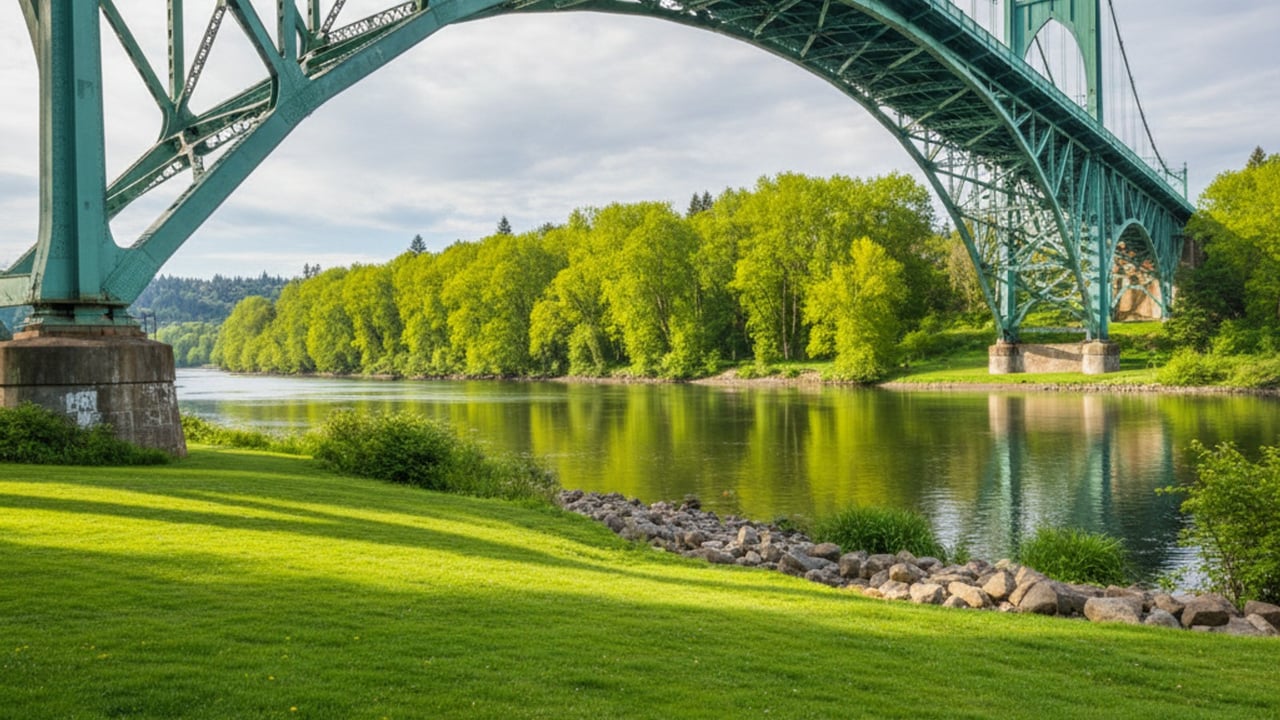
St. Johns: This feels like a village within a city. Located at the tip of the peninsula, it is anchored by the breathtaking St. Johns Bridge. Because it’s further out, it has its own downtown strip, a fiercely independent spirit, and residents who rarely feel the need to cross the bridge into downtown.
-
Kenton: If you see a giant statue of Paul Bunyan, you’re in Kenton. This neighborhood centers around a charming, walkable commercial strip on Denver Avenue. It has a great library, a distinct small-town feel, and easy access to the MAX line.
-
Overlook: Sitting atop the bluff, Overlook offers some of the best views of the downtown skyline and the industrial riverfront. It tends to have statelier older homes and is home to the Kaiser Interstate campus. It’s a favorite for commuters who want to be the first stop out of the city.
-
University Park: As the name suggests, this area is dominated by the University of Portland. The presence of the university keeps the streets well-maintained and brings a collegiate energy to the area, without being a rowdy party district.
-
Mississippi/Williams (Border Area): While sometimes grouped with Northeast, these corridors serve as the vibrant gateway to the North. They are dense, high-energy areas packed with music venues like Mississippi Studios, endless dining options, and boutique shopping.
Lifestyle: What is North Portland Known For?
Life in the North is defined by a slower pace than the inner eastside, but with no shortage of things to do. The amenities here lean heavily toward outdoor recreation and community-focused businesses.
Parks & Nature
You cannot talk about this area without mentioning Cathedral Park. Located directly under the gothic arches of the St. Johns Bridge, it is one of the most photographed spots in the city and a premier summer hangout. Further north, Pier Park feels like an enchanted forest with towering redwoods and one of the city's best disc golf courses. For true nature immersion, the Smith and Bybee Wetlands offer a quiet place to kayak or hike while spotting herons, eagles, and turtles.
Dining & Shopping
You won’t find many big-box stores deep in the peninsula. Instead, the area supports local grocers like New Seasons and distinct commercial main streets. St. Johns and Kenton both host popular farmers markets that draw crowds on weekends. The dining scene is unpretentious but excellent, ranging from classic diners to diverse food cart pods that serve everything from wood-fired pizza to authentic street tacos.
Entertainment
For those who love adrenaline, Portland International Raceway (PIR) is a major landmark, hosting drag racing, motocross, and the holiday light show. Just next door is the Expo Center, which hosts everything from garden shows to antique expos. For a quieter night out, the historic St. Johns Twin Cinema offers movies at prices that feel like a throwback to a different era.
Commuting and Transportation
One of the biggest perks of living in North Portland is the transportation infrastructure. It is arguably one of the most connected parts of the city for commuters.
The MAX Yellow Line runs right down Interstate Avenue, serving as the primary artery connecting the North to downtown Portland. It’s a reliable option for those working in the city center who want to skip rush hour traffic.
If you prefer two wheels, this quadrant is incredibly bike-friendly. The geography is relatively flat compared to the West Hills, and Willamette Boulevard offers a scenic commuting route along the bluff with views of the river and Forest Park across the water.
For drivers, proximity to I-5 is a major selling point. You can zip north to Vancouver, WA, in minutes (traffic permitting), or head south into the city center. However, being close to the bridge does mean dealing with bottleneck traffic during peak hours, so that is something to factor into your daily routine.
Is North Portland Safe? (Crime & Community Data)
When researching a move, safety is naturally a top priority. Like any urban environment, the experience in North Portland can vary significantly from block to block.
Generally speaking, neighborhoods like Overlook and University Park often report lower incident rates compared to busier commercial corridors. However, other areas may experience higher activity, particularly property crimes which are common throughout the city. The area is known for strong neighborhood associations and community engagement; residents here tend to look out for one another.
Rather than relying on anecdotes or broad labels, it is always best to check the official Portland Police Bureau crime maps. These provide up-to-date statistics that allow you to see exactly what is happening on the specific streets you are considering.
Real Estate Market Overview
The housing stock in North Portland is full of character. You will find a charming mix of Victorian farmhouses, Craftsman bungalows, and mid-century cottages—especially as you move deeper into St. Johns.
Historically, this area was more affordable than Northeast or Southeast Portland, making it a haven for first-time buyers and artists. While prices have risen significantly over the last decade, you can still sometimes find better value here compared to the inner eastside. A typical starter bungalow might range significantly in price depending on the specific street and level of renovation, often landing between $450K and $650K.
There is also a wave of new construction, particularly along the Interstate Avenue and Williams corridors. These areas are seeing an influx of modern condos and apartments, offering options for those who prefer low-maintenance living over maintaining a historic home.
Frequently Asked Questions About North Portland
What is considered the 'Fifth Quadrant' in Portland?
The "Fifth Quadrant" is a long-standing local nickname for North Portland. Before the city officially recognized South Portland as a sixth sextant, the city was divided into five sections, and North Portland was the distinct peninsula located between the Willamette and Columbia Rivers.
Is North Portland a good place for families?
North Portland offers many amenities that appeal to households with children, including access to large green spaces like Pier Park and Columbia Park. The area is served by Portland Public Schools, including Roosevelt and Jefferson High Schools, and features numerous community centers and libraries.
How far is North Portland from downtown?
Commute times depend heavily on your specific neighborhood. From close-in areas like Overlook, it’s a quick 10-minute drive or 15-minute MAX ride. From further out in St. Johns, expect a 20-minute drive or a 30-40 minute bus commute.
What is the difference between North and Northeast Portland?
The dividing line is generally considered to be Williams Avenue. West of that line is North Portland, which feels more industrial and disconnected (in a good way) due to the river boundaries. Northeast Portland tends to feel more continuous with the rest of the Eastside grid and often commands slightly higher real estate prices.