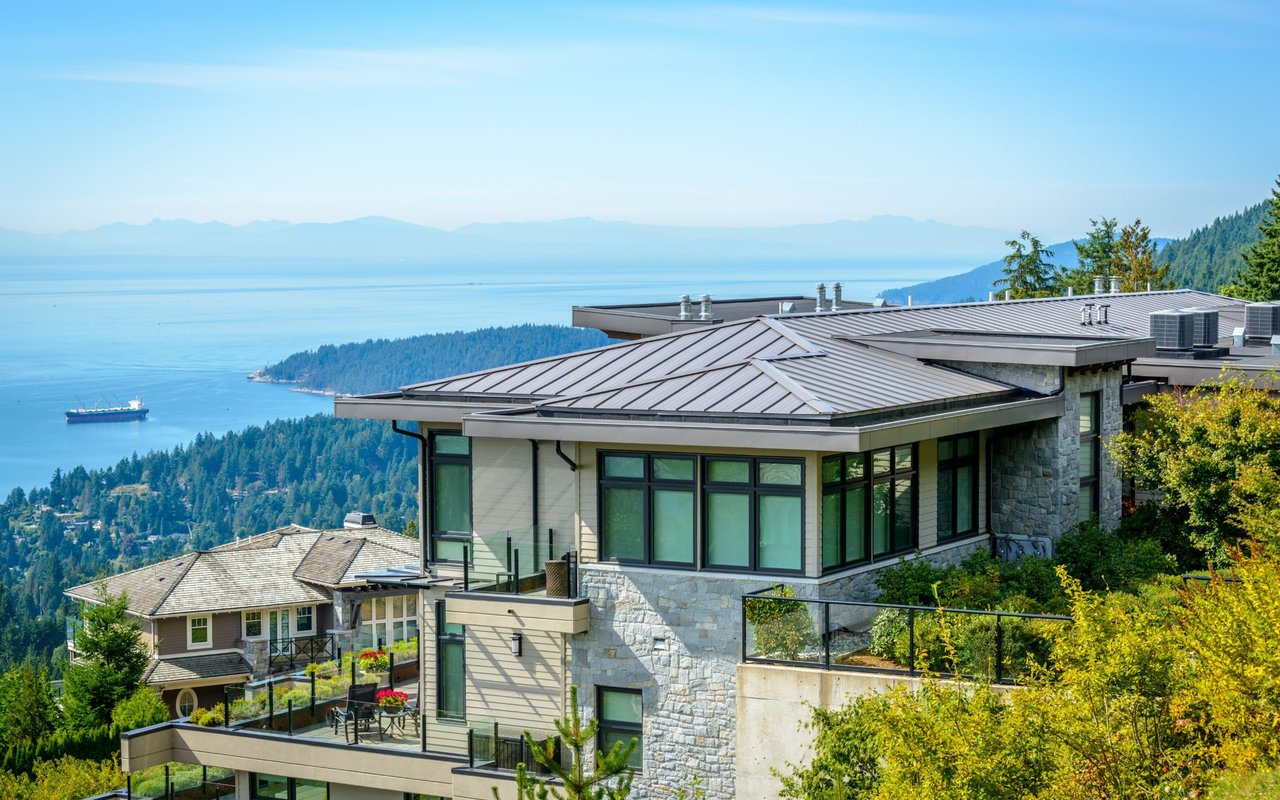
Sellwood sits in the southeast quadrant of Portland, OR, bordered by the Willamette River and connected to the broader metro area by the Sellwood Bridge. Buyers looking at this specific neighborhood usually want a distinct residential setting that still allows for a straightforward commute into downtown Portland, making it one of the best neighborhoods in Portland, OR.
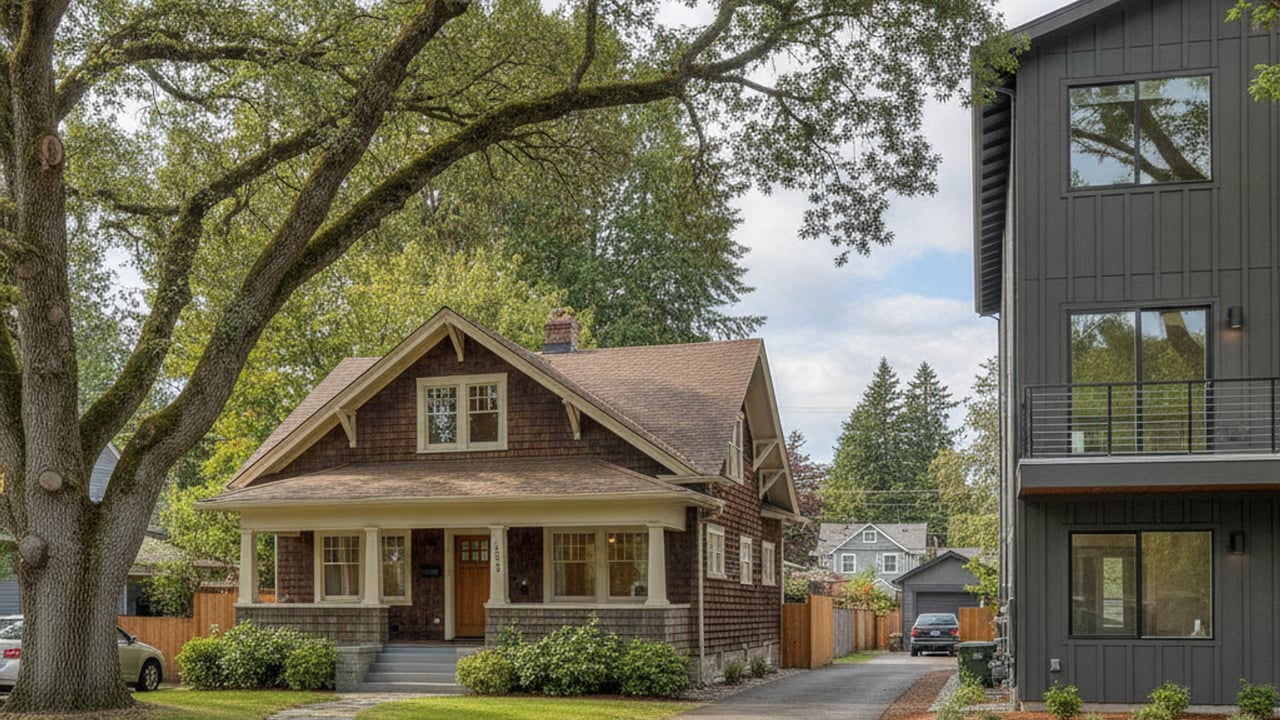
The broader Portland housing market carries a median sale price of roughly $561,500, with homes typically going under contract in about 10 days. In Sellwood, you'll encounter a mix of historic properties and newer infill developments, with local prices often sitting slightly above that citywide median. The neighborhood functions as a self-contained district - its own commercial corridors, transit routes, and public facilities included.
The Layout of Sellwood in Portland, OR
Sellwood occupies a distinct pocket of Southeast Portland, defined by riverfront access and a historic street grid. Its character is shaped in no small part by the fact that it developed as an independent town before Portland annexed it - that history is still legible in how the neighborhood is organized.
The Sellwood Bridge, a deck arch bridge spanning the Willamette River, is both the neighborhood's defining landmark and its primary western access point. The Sellwood-Moreland area grew historically around the Portland Railway, Light and Power Sellwood Division Carbarn, known today as Carmen's Clubhouse - a National Register of Historic Places site that anchors the district's architectural identity.
Housing here consists largely of single-family homes on standard Portland lots, with multi-family buildings and newer townhomes mixed in. The streets have mature trees, sidewalks that connect residential blocks directly to commercial avenues, and immediate access to the waterfront parks and trails running along the Willamette River.
Fitting Into the Broader City
As part of Southeast Portland, Sellwood feels slightly removed from the immediate downtown core while staying fully wired into the city's infrastructure. Buyers comparing Portland neighborhoods often weigh Sellwood against adjacent areas like Westmoreland, which share similar transit connections but offer different housing styles and commercial densities.
Property Types and Home Prices in Sellwood
The Portland real estate market currently holds about 2,025 available homes, with a citywide median sale price around $561,500. Sellwood listings generally price above that broader median - the localized demand for this zip code is real.
Estimates for Sellwood home values land in the mid-$500,000s to mid-$600,000s. Recent data shows single-family houses in the neighborhood frequently listing around $650,000, though multi-family properties and smaller attached units pull the overall median closer to $598,000. Competition is serious: across Portland, homes average just 10 days on market, and roughly 45% sell above asking. Sellwood doesn't move slower than that.
The housing stock leans heavily toward early 20th-century builds - bungalows, foursquares, Victorian-era styles. Most have seen significant interior renovations while keeping their original exterior footprints intact. If you're looking at one of these older homes, budget realistically for potential updates to plumbing, electrical, and roofing systems. That's not a dealbreaker; it's just the math.
New Construction and Property Rules
Developers have introduced newer townhomes and condominium complexes alongside the established single-family stock, particularly along the main transit corridors. These builds typically include modern energy-efficiency standards and different maintenance profiles. If you're purchasing an attached unit or a property within a newer development, review any associated homeowner association fees carefully - they factor directly into your monthly debt-to-income ratio during mortgage underwriting.
Daily Life, Dining, and Transit in Sellwood
Most residents do the bulk of their everyday errands and dining along SE 13th Avenue and SE Tacoma Street. These corridors keep a solid concentration of local businesses close enough that you're not driving across the city for basic needs.
The local dining scene covers a wide range of options. Frequently cited spots include Bastion, a Cena Ristorante, The Last Rodeo, and Papa Haydn. Residents also frequent The Focacceria by Montelupo, Moreland Ale House, Sebastiano's, and The Muddy Rudder. Beyond those, Yelp data highlights Harney Street Cafe, Gino's, Bertie Lou's Cafe, Xin Ding Dumpling House, and Monty's Red Sauce as established neighborhood fixtures.
Commuting out of Sellwood means mixing bridge access with public transit. The Sellwood Bridge handles the bulk of vehicle traffic heading west toward the South Waterfront and Interstate 5. For trips north into downtown or east toward other neighborhoods, SE McLoughlin Boulevard and SE 17th Avenue are your primary surface street options.
Public Transit Options
There's no light rail station inside Sellwood's boundaries, but you're not without options. The neighborhood is served by TriMet bus lines 19, 35, 40, and 70. For rail, the nearest MAX Orange Line stops are just outside the neighborhood - SE Tacoma/Johnson Creek and SE 17th Ave & Rhine St - and provide a direct route into downtown Portland.
Local Schools, Healthcare Facilities, and Climate
Sellwood falls under Portland Public Schools, officially designated as Portland School District 1J. The neighborhood attendance zones typically route students to Duniway Elementary on SE Reed College Place, Sellwood Middle School on SE 15th Avenue, and Cleveland High School on SE 26th Avenue. If you're considering private options, Saint Agatha Catholic School is present in the immediate area.
Medical care is accessible through several nearby networks. The closest facilities to Sellwood are Providence Milwaukie Hospital and OHSU Hospital, alongside the OHSU Center for Health & Healing and Peter Kohler Pavilion. The broader Portland metro area also includes Legacy Emanuel Medical Center, Legacy Good Samaritan Medical Center, Adventist Health Portland, Kaiser Permanente Westside Medical Center, and Doernbecher Children's Hospital at OHSU.
Weather Expectations
Sellwood gets the standard Pacific Northwest climate - dry, warm summers and cool, wet winters. Most of the rainfall lands between November and April, which is what keeps that tree canopy and the green spaces along the Willamette River looking the way they do. Summer temperatures rarely reach extremes, so homes without central air conditioning are common. Many newer builds and recent renovations do include modern HVAC systems, but don't assume it's standard in an older bungalow.
Buying or Renting a Home in Sellwood
With roughly 2.8 months of housing supply across the Portland metro area, this is a seller's market, and available properties in Sellwood move quickly. If you're targeting this neighborhood specifically, your offer process needs to be ready before you find the house - not after.
The rent-versus-buy decision here often comes down to timing and inventory. Sellwood is a smaller geographic footprint than many Portland neighborhoods, which means the number of active listings at any given moment is limited. Buyers after historic single-family homes will face a different level of competition than those open to a modern townhome or an apartment lease along the commercial corridors.
Working with a local Portland agent who knows the 97202 zip code makes a real difference. Someone tracking incoming listings in this specific market can read the pricing premiums attached to particular blocks and structure your negotiation accordingly. Portland properties are currently averaging a 1.01 sale-to-list ratio - that's not the kind of market where you figure out your offer strategy on the fly.
Frequently Asked Questions
How much of a premium do buyers pay for a single-family home in Sellwood compared to the rest of SE Portland?
Sellwood single-family homes often list around $650,000, which sits noticeably above the broader Portland median of $561,525. The exact premium varies by block and property condition, but you should expect to pay more for Sellwood's riverfront proximity and localized commercial avenues than you would in many other Southeast Portland neighborhoods.
What are the main differences between buying a house in Sellwood versus the neighboring Westmoreland area?
Sellwood and Westmoreland share a lot of amenities, but Sellwood gives you direct access to the Willamette River and the Sellwood Bridge. Sellwood's housing mix also includes more newly developed multi-family units and townhomes along its commercial corridors, while Westmoreland leans slightly more toward established single-family residential blocks.
Will I be required to purchase special flood insurance if I buy a home near Sellwood Riverfront Park?
It depends on the exact elevation and flood zone designation of the specific property. Homes located directly along the Willamette River or within designated high-risk FEMA flood zones must carry flood insurance if financed with a federally backed mortgage. Review the property's flood map status during the due diligence period - don't skip that step.
How does traffic on the Sellwood Bridge impact daily commute times into downtown Portland?
The Sellwood Bridge is the primary western exit from the neighborhood, and traffic volume dictates how long your commute to the South Waterfront and downtown actually takes. During peak morning and evening hours, congestion on the bridge and on connecting surface streets like SE McLoughlin Boulevard will extend your drive time.
Are there historic design overlays or zoning rules that restrict how I can remodel an older home in Sellwood?
Certain properties or blocks may fall under historic preservation rules, particularly those near landmarks like the Portland Railway, Light and Power Sellwood Division Carbarn. If a home carries a historic designation or sits in a specific overlay zone, exterior renovations and additions must comply with city design guidelines. Confirm the property's status before you finalize a renovation budget.
Is Sellwood walkable enough to live comfortably without a car in Portland?
For daily errands, yes - the commercial corridors on SE 13th Avenue and SE Tacoma Street cover everyday dining, shopping, and services. Commuting outside the neighborhood without a car means relying on TriMet bus lines 19, 35, 40, and 70, or walking to the MAX Orange Line stops located just outside Sellwood's borders.