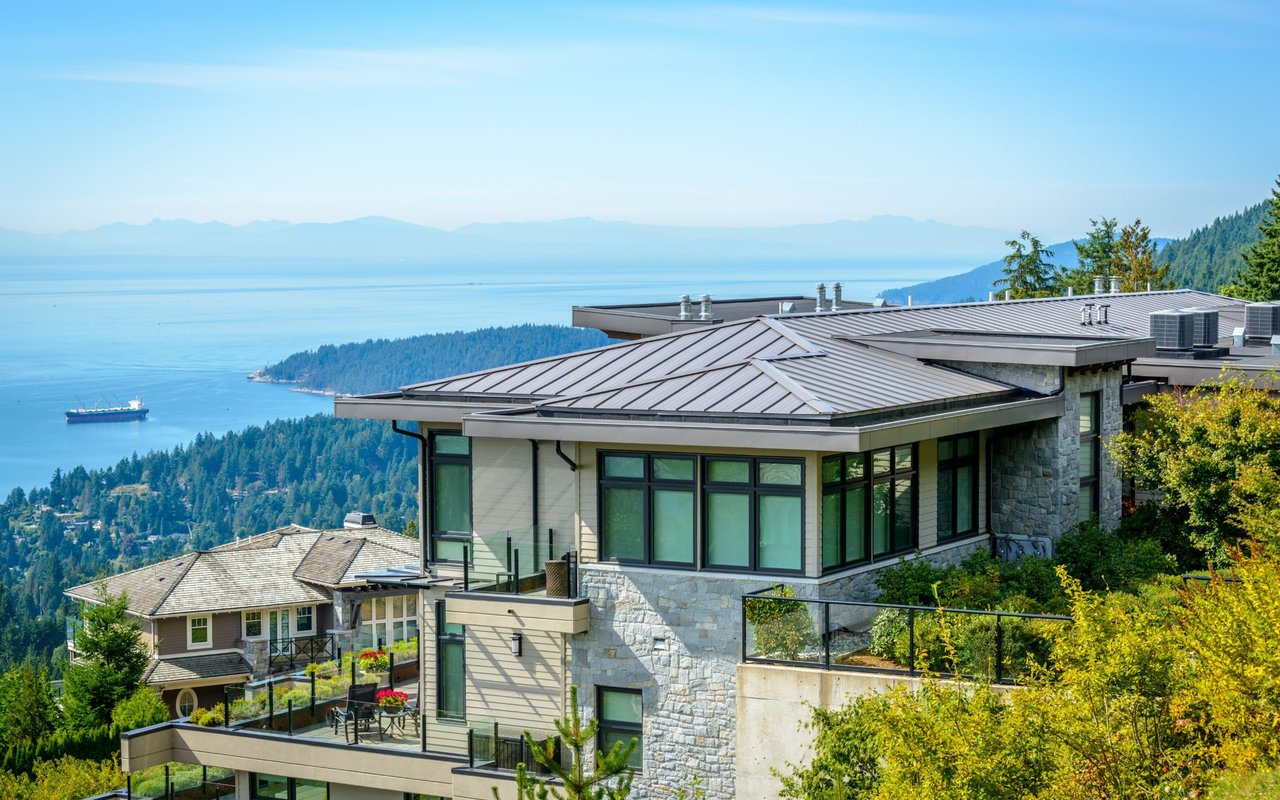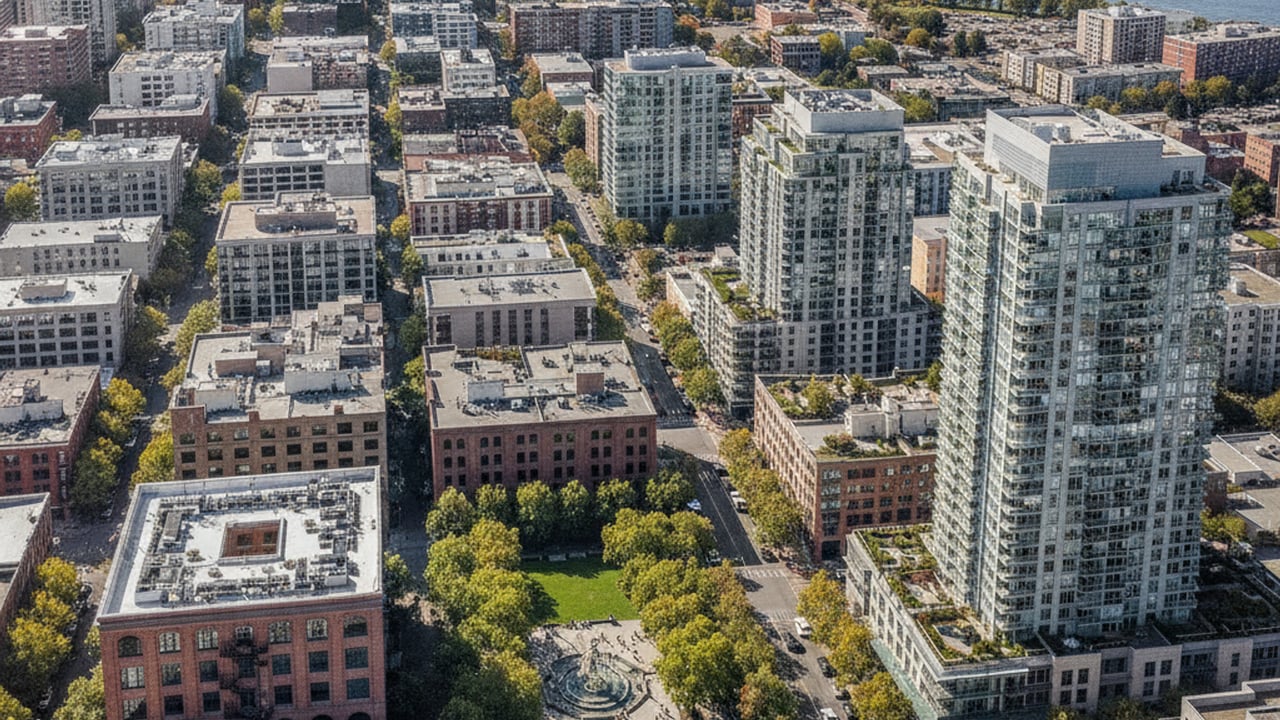
The Pearl District sits in the center of Portland, OR, anchored by Powell's City of Books - widely recognized as the world's largest independent bookstore. It was once a largely industrial zone of warehouses and rail yards. Now it's a dense, mixed-use residential and commercial hub, and buyers looking for the best neighborhoods in Portland will find an intensely urban environment built around converted structures and modern mid-rises.
Buying here means trading traditional single-family lots for walkability and immediate access to city amenities. The local market leans almost entirely toward condos, lofts, and townhomes. Knowing the specific property types, typical costs, and everyday services available helps you figure out whether this setting actually fits what you're looking for.
An Overview of the Pearl District
The Pearl District sits just north of downtown Portland, bordered by the Willamette River to the east and Interstate 405 to the west and north. That central position makes it a natural focal point for the city's urban core.
The housing stock is defined by multi-family buildings - everything from early 20th-century brick warehouse conversions to sleek contemporary high-rises. Green spaces like Jamison Square and Tanner Springs Park break up the street grid and give residents somewhere to be outside that isn't a sidewalk.
Where the District Fits within Portland
Geographically, the Pearl District acts as a bridge between the central business district and the neighborhoods of Northwest Portland. You can cross Burnside Street and be downtown, or head west toward the Alphabet District without much effort.
That positioning means the neighborhood absorbs a lot of the city's daily foot traffic and commerce. It's a dense residential alternative to the more spread-out, single-family neighborhoods you'll find across the river on the east side - a genuinely different way of living in Portland.
Real Estate and Home Prices in the Area
As of mid-2026, the median sale price for a home in the Pearl District was roughly $430,000 - a slight decrease year-over-year. That figure reflects the heavy concentration of condominiums, which trade at different price tiers than detached houses.
You'll encounter a mix of historic properties and newer constructions when you start touring. And because almost all of the housing stock here is in shared buildings, you'll want to factor monthly homeowner association (HOA) dues into your carrying costs before you get too attached to any list price.
Types of Homes Available
The district is known for its authentic industrial lofts - exposed brick walls, timber beams, large multi-pane windows that survived from the area's manufacturing days. They photograph well, and in person they hold up.
Alongside those historic conversions, developers have built numerous modern condo towers over the last two decades. These buildings tend to offer more traditional floor plans, private balconies, and updated amenities. It's a real contrast to the open-concept loft spaces, and which one appeals to you depends entirely on how you actually live.
How Prices Compare to the Rest of Portland
Pearl District properties often price lower than the broader city median, largely because urban condos carry less square footage than detached single-family homes. For context, the median sale price across all of Portland, OR, was around $561,525 in May 2026, with homes spending roughly 10 days on the market.
So the baseline purchase price here can look appealing - but run the full monthly number before you decide. Condo fees, parking spaces, and building assessments can add substantially to what the mortgage alone would suggest.
Dining, Transit, and Daily Life
Residents here live within blocks of dozens of restaurants, cafes, and bakeries. The neighborhood's density means most people handle daily errands and meals without starting a car. Powell's City of Books anchors the southern edge of the neighborhood and draws both locals and visitors, so there's a consistent level of street activity that doesn't really have an off switch.
Beyond food and retail, the district holds a range of everyday services - fitness centers, boutique shops, and the kind of ground-floor commercial spaces that put a coffee shop or a dry cleaner right outside your lobby door.
Everyday Dining and Shopping
The dining options here run from quick weekday coffee stops to formal dinner venues. Ground-floor commercial spaces in residential buildings regularly house local eateries, which is convenient when you don't feel like going anywhere.
For groceries, the area includes several urban supermarkets and specialty food shops. Picking up ingredients on the walk home from work or a transit stop is genuinely practical here, not just a talking point.
Commuting and Getting Around
The Portland Streetcar runs directly through the neighborhood, connecting residents to the South Waterfront, downtown, and the inner east side. For drivers, Interstate 405 provides immediate highway access to the rest of the metro area.
That said, street parking is metered and often scarce. If you plan to keep a vehicle, verify whether a specific condo unit includes a deeded parking space - don't assume it does.
Schools, Healthcare, and Local Weather
The Pearl District falls under Portland Public Schools. Buyers should check specific address boundaries to confirm their designated attendance zones, since urban school boundaries can be less intuitive than you'd expect.
The neighborhood also sits close to several major medical centers, and understanding the Pacific Northwest climate is worth a moment of your time if you're relocating from somewhere with four distinct seasons.
Local School District Assignments
Students in the Pearl District typically attend Chapman Elementary and West Sylvan Middle School. For high school, the area is zoned for Lincoln High School, which has received high ratings from organizations like Niche and GreatSchools.
Because urban boundaries can shift, verify current enrollment zones directly with Portland Public Schools. Proximity to these campuses requires traveling city streets, so many students use public transit or district transportation.
Nearby Medical Centers
Legacy Good Samaritan Hospital & Medical Center is located just blocks away in Northwest Portland, providing emergency services and specialized care. Other nearby facilities include Randall Children's Hospital at Legacy Emanuel and Providence Portland Medical Center. That concentration of medical infrastructure means you're not far from comprehensive care.
What to Expect from the Climate
Portland's climate has distinct wet and dry seasons. Winters are generally mild but cloudy and rainy, with temperatures hovering in the 40s. Summers are dry and warm, often reaching into the 80s and 90s.
If you're looking at older loft buildings specifically, check whether the unit has central air conditioning. Many historic conversions don't have it installed by default, and a summer in the 90s makes that a real question.
Finding Your Home in the Pearl District
With roughly 2,025 homes in active inventory across the broader Portland market in early 2026, you'll have options - but specific condo units in the Pearl District can move quickly. Over 45% of Portland homes sold above their list price this spring.
Working through condo documents, HOA health, and building rules adds a layer to this process that a straight single-family purchase doesn't have. It's not complicated, but it rewards paying attention.
Searching for Available Properties
When you're touring units, pay close attention to the building's maintenance history and any upcoming assessments. A lower list price sometimes signals deferred maintenance or high monthly dues - not a bargain.
It's also worth visiting at different times of day. A street that feels calm on a Tuesday morning can be a different experience on a Friday night. Knowing that rhythm matters when you're choosing where to live long-term.
Working with a Local Professional
An agent who knows Portland's condo market can pull specific HOA documents and reserve studies for review and help you understand what utilities and amenities the monthly fees actually cover. That's where the real comparison between buildings happens - not on the listing page.
Whether you're drawn to a historic brick loft or a modern high-rise with skyline views, lean on your agent to compare recent sales data within the exact building you're considering. The Pearl District has enough variety that the right fit is worth finding carefully.
Frequently Asked Questions
What are average HOA fees for Pearl District condos in Portland, and what do they typically cover?
HOA fees vary significantly depending on the building's age and amenities. Monthly dues generally cover water, sewer, garbage, and common area maintenance, but you'll need to review the specific condo documents for exact figures. Some luxury buildings include concierge services and fitness centers, which increase the monthly cost.
Do most historic lofts and newer condos in the Pearl District come with deeded parking spaces?
Parking availability depends entirely on the specific building and unit. Many newer condo towers include deeded underground parking spaces with the purchase. Historic loft conversions are less likely to have attached parking, often requiring residents to lease spaces in nearby neighborhood garages.
How does buying real estate in the Pearl District compare to Portland's Slabtown or South Waterfront neighborhoods?
The Pearl District features a mix of historic warehouse conversions and modern towers, whereas the South Waterfront is almost exclusively newer high-rise construction. Slabtown offers a slightly quieter, rapidly developing mix of mid-rise apartments and condos just to the northwest. All three provide dense urban living, but the Pearl District remains the most centrally located and commercially active.
What should buyers know about unreinforced masonry (URM) and earthquake retrofitting when looking at older Pearl District buildings?
Some historic brick buildings in the Pearl District are classified as unreinforced masonry structures. If you're looking at older lofts, ask your agent to check whether the building has undergone seismic retrofitting. Upgrades can affect both the safety of the building and future HOA assessments.
How common are large special assessments for exterior maintenance in converted Pearl District condo buildings?
Special assessments happen when a building's reserve funds can't cover major repairs like roof replacements or exterior sealing. Older converted warehouses may face these costs as historic materials age. Review the HOA's reserve study carefully during the inspection period - it's the clearest indicator of what might be coming.
Is the Pearl District in Portland considered a family-friendly neighborhood for prospective homebuyers?
The Pearl District offers dense urban living rather than traditional single-family homes with private yards. Residents have access to Portland Public Schools, including Chapman Elementary and Lincoln High School. The area also features public green spaces like Jamison Square and is close to Randall Children's Hospital at Legacy Emanuel.