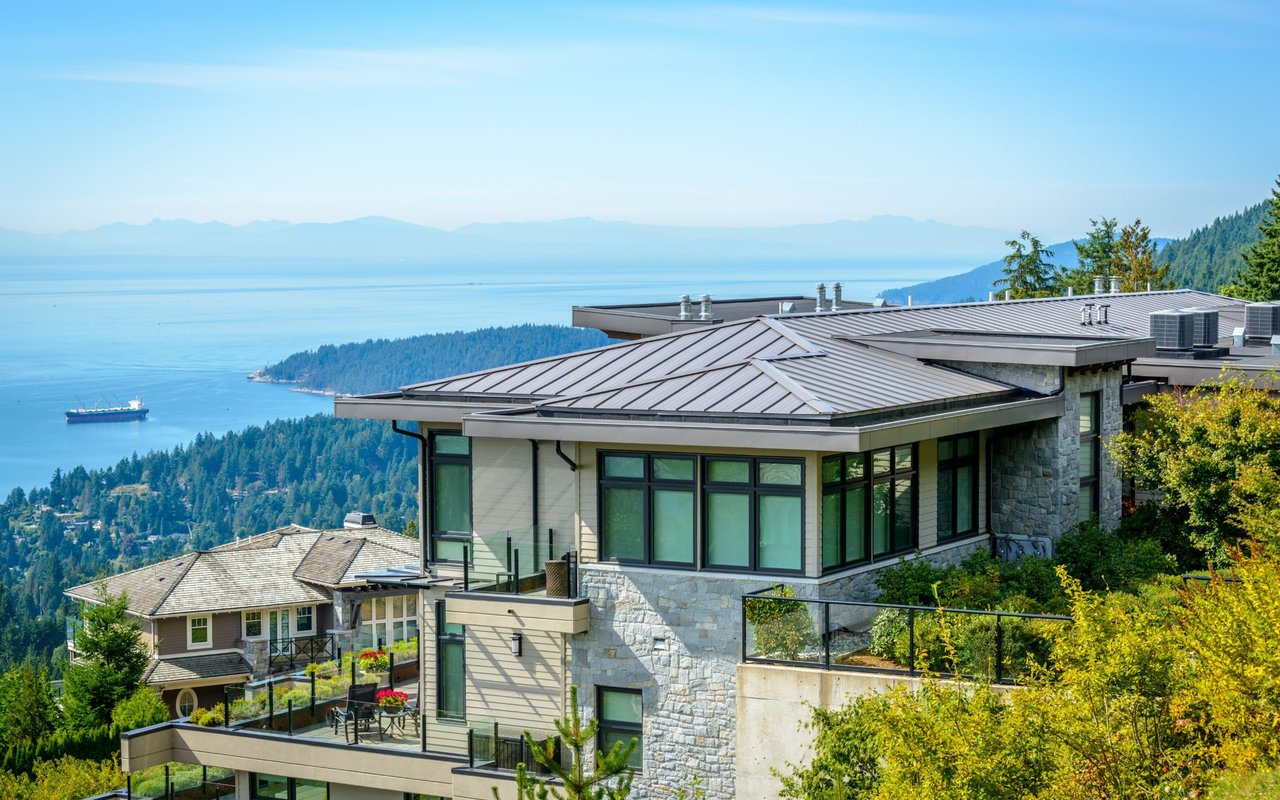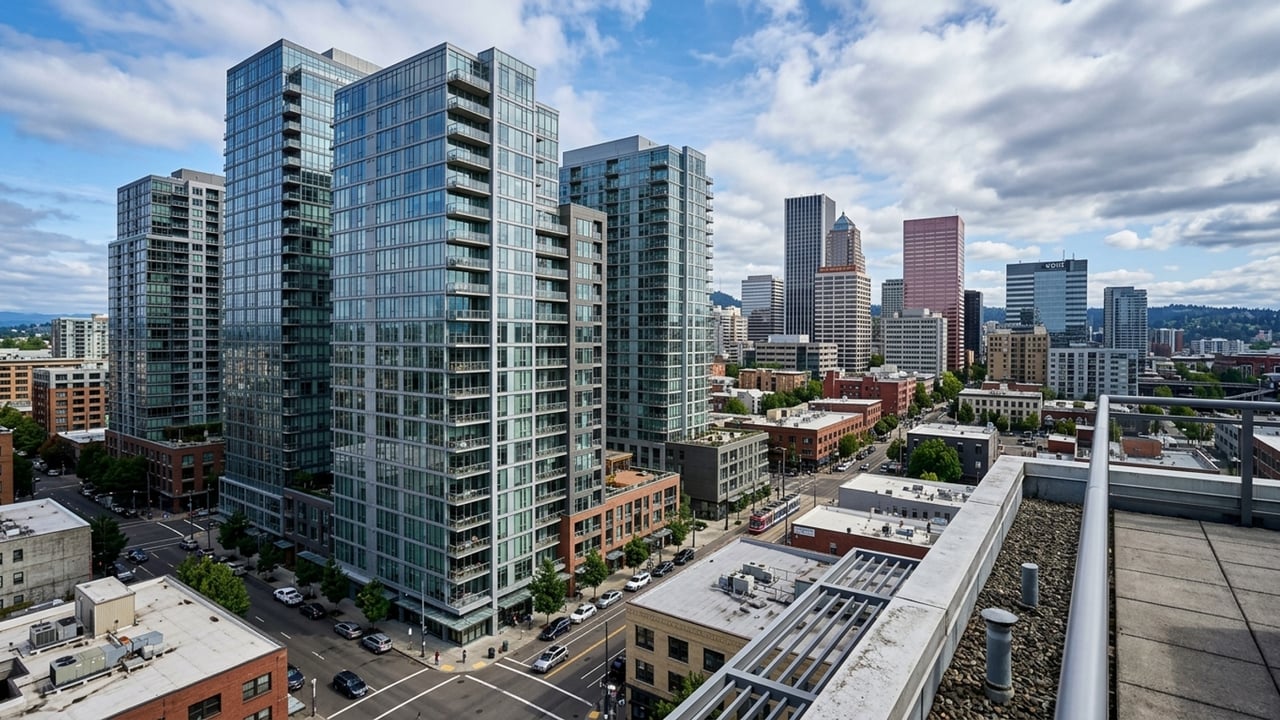
For first-time home buyers in Portland, OR, the median home price sits around $561,525, with inventory hovering near 2,025 available properties. If you're trying to figure out what your money actually gets you here, the honest answer is: it depends entirely on what type of home you're buying. Modern glass towers along the Willamette River and century-old bungalows in tree-lined conservation districts are both on the table - they just come with very different trade-offs.
Multnomah County's effective property tax rate averages between 0.98% and 1.08%, and that number will show up every month in your budget whether you're buying a downtown condo or a detached house with a yard. Knowing the housing stock before you start touring saves you from falling in love with the wrong property type.
Portland Housing Prices and Market Trends
The market moves fast. Homes are averaging just 10 days on the market before going pending, and out of roughly 713 homes sold recently, about 45% closed above asking price. That's not a market where you can take a week to think it over.
Condominiums give you a different entry point. The overall median sits at $561,525, but condo prices in the Portland Region averaged closer to $325,000 in the first quarter of 2026 - though citywide estimates can reach $425,000. The cost of living in Portland is indexed at 119.3, roughly 19.3% above the national average, so that lower condo purchase price doesn't exist in a vacuum. You're still paying Portland prices for everything else.
Tracking Inventory and Sales
There are roughly 2,025 active listings across all property types at any given time, which translates to about 2.8 months of supply. That's enough to give you options, but not enough to give you leverage.
The average sale-to-list ratio sits at 101.2% - meaning buyers are routinely paying slightly over asking. In sub-areas like the Pearl District or Northwest Portland, you should expect to move quickly and come in prepared, not just preapproved.
Condominiums and High-Rise Living
Condos make up a significant share of the urban housing supply, especially in Northwest Portland and the Pearl District, where walkability and transit access are part of what you're paying for.
The downtown skyline has several prominent residential buildings worth knowing by name: Cosmopolitan on the Park, Eliot Tower, The Casey, and the Ritz-Carlton Residences on the higher end, along with Atwater Place, Benson Tower, The Gregory, The Harrison, Pinnacle, and John Ross. Condominium ownership in any of these buildings means monthly HOA dues - fees that cover exterior maintenance, common area upkeep, and often utilities like water and garbage.
Understanding HOA Fees
For mid-market buildings, typical HOA fees in Portland run $250 to $600 per month. Downtown and Pearl District high-rises generally sit between $700 and $850 per month. Luxury towers with extensive amenities can push past $1,000 per month.
These aren't optional costs you can set aside when running your numbers. Lenders include HOA dues in your debt-to-income ratio, so a building with $900-per-month fees will affect how much you can borrow.
Waterfront and Luxury Properties
The Willamette River cuts the city in half and sets the backdrop for many of Portland's premium properties. South Waterfront developments put you directly on paved river paths with transit close by - and the price reflects it.
Waterfront condos command higher prices for unobstructed views and proximity to the water. Secure parking, concierge services, and fitness centers are common in these buildings. The luxury segment also includes new-construction condos scattered throughout the metro area - modern floor plans, energy-efficient appliances, updated materials - built for buyers who want to move in without a punch list.
Evaluating New Construction
A newly built unit means no immediate exterior repairs and no aging roof assessments waiting around the corner. Initial HOA fees are often set lower to attract buyers, though they tend to climb as the building builds out its reserve fund - so don't assume the number you see on day one is permanent.
Before closing, review the developer's history and the specific warranties attached to the property. Oregon law does provide certain protections for new condo buyers, but a thorough inspection is still worth doing.
Townhomes, Duplexes, and Multi-Family Options
Not everyone wants a high-rise, and not everyone needs a full yard. Townhomes sit in the middle - multi-level floor plans, small private patios, and HOA fees that are typically lower than high-rise condos because there's no elevator or extensive shared infrastructure to maintain. You'll find them in urban neighborhoods and at the suburban edges of the city.
Duplexes and multi-family properties attract buyers who want to offset their mortgage with rental income. Portland's zoning updates have made it more straightforward to build and buy these housing types in neighborhoods that were traditionally single-family.
The Shift Toward Middle Housing
Changes in city code now allow more flexibility for multi-unit dwellings on standard residential lots, which has added more smaller multiplexes to the inventory across the city.
If you're going this route, work with a lender who actually knows multi-family financing. Down payment requirements and how rental income gets calculated are both different from a standard single-family loan - and those differences can affect what you qualify for.
Frequently Asked Questions
Which Portland neighborhoods are best for finding historic Craftsman and Foursquare homes?
Older, established parts of the city tend to have the highest concentrations of historic Craftsman and Foursquare homes. Buyers frequently search those areas for century-old architecture, though specific inventory shifts constantly against the backdrop of 2,025 active listings currently on the market.
Does Portland's Residential Infill Project allow you to build a duplex or ADU on any single-family lot?
Not automatically. The Residential Infill Project expanded the ability to build duplexes and Accessory Dwelling Units (ADUs) on many residential lots across the city, but specific lot size, zoning designations, and local building codes dictate exactly what you can build on a given parcel.
What are the most common hidden issues to look out for when buying an older Portland bungalow?
Outdated plumbing, unreinforced masonry, and aging electrical systems show up regularly in older bungalows. Schedule a thorough inspection before you close on a century-old home - not after.
Are condos or attached townhouses generally a better value for first-time buyers in Portland?
It depends on your budget and how you actually plan to live. Condos offer a lower entry price - median around $325,000 to $425,000 - but HOA fees ranging from $250 to over $1,000 per month are part of that deal. Townhomes often carry higher purchase prices but lower monthly association dues.
How difficult is it to find new construction single-family homes within Portland city limits?
It takes time, and the inventory is genuinely limited. Most new builds within the city are infill projects, townhomes, or multi-family units rather than detached houses. Vacant land inside the city limits is scarce.
Do homes located in Portland's historic conservation districts have specific rules or extra costs for exterior renovations?
Yes. Homes in historic conservation districts are subject to specific design guidelines for exterior changes, and homeowners must obtain approval before making updates to ensure the work matches the historic character of the neighborhood.