The median home price in Multnomah County sits around $545,000 as of mid-2026. When buying a home in Portland, OR, first-time buyers will find a mix of attached housing and detached properties, but the upfront costs often present the biggest hurdle to ownership.
Fortunately, state and city programs offer substantial down payment assistance to qualified applicants. Understanding local property taxes, transit routes, and pricing trends will help you focus your search on the right neighborhoods.
Steps to Buying a Home in the Portland Metro
The conforming loan limit for Multnomah County is $832,750 for 2026. Most entry-level properties fall well below this threshold, meaning standard conventional or FHA loans work for the vast majority of purchases.
You should secure a mortgage pre-approval before touring houses. A lender will review your income, credit, and debts to determine your maximum purchase price. This pre-approval letter shows sellers you have the funds to close the deal.
Next, hire a real estate agent who understands the nuances of the local market. An experienced agent will help you draft a competitive offer and schedule a real estate appraisal to ensure the home's value matches the agreed-upon price. The entire process from an accepted offer to closing usually takes 30 to 45 days.
Current Home Prices and Property Types
The overall median home price in the Portland area is approximately $545,000. Your purchasing power will dictate the type of property you can target as you begin viewing listings.
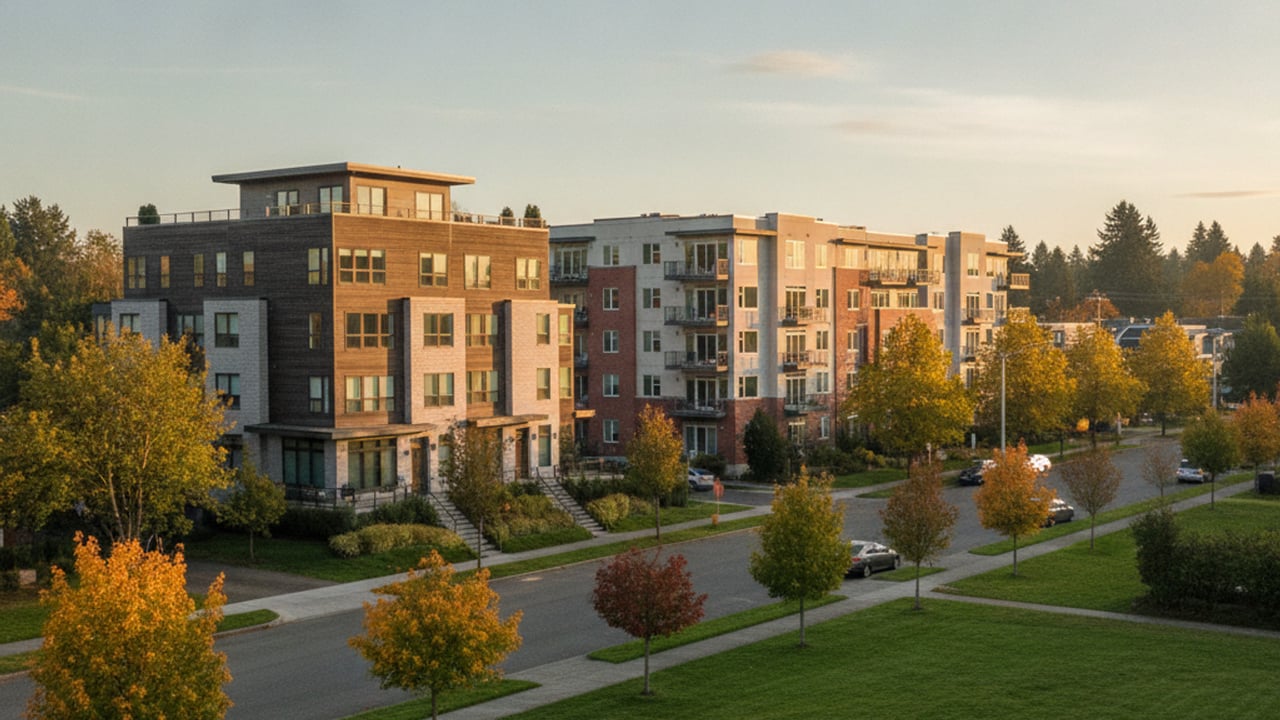
Townhouses and condominiums offer the most accessible entry point, with prices typically starting in the $400,000s. These attached homes often require smaller down payments, though you should factor monthly homeowners association dues into your budget.
Single-family detached homes generally start in the mid-$500,000s and climb higher in closer-in neighborhoods. Buying a detached house usually means higher closing costs and larger down payments, but you avoid monthly association fees.
Financial Help Available for Local Purchasers
Buyers purchasing within city limits can access up to $100,000 in down payment assistance through local initiatives. These funds reduce the cash needed to close on a property and make monthly payments more manageable.
Most of these resources come as a forgivable second mortgage or a direct cash grant. They lower your upfront costs and can even help cover standard closing expenses like appraisal fees and title insurance.
To access these funds, applicants must complete a homebuyer education course through an approved housing counselor. The Portland Housing Center frequently hosts these required classes. Eligibility always depends on your household income and the home's purchase price.
State Assistance Through Oregon Housing and Community Services
The state offers several pathways for buyers through Oregon Housing and Community Services (OHCS). These options include the Oregon Bond Residential Loan program and Flex Lending products.
Each program targets different financial situations. Here is a breakdown of the primary state-level options:
- Cash Advantage: Provides up to 3% of the loan amount to help cover closing costs and the down payment.
- Down Payment Assistance Grants: Offers up to $60,000 or 20% of the purchase price for buyers earning at or below 100% of the area median income.
- Rate Advantage: Delivers a below-market interest rate to lower the monthly mortgage payment.
City Funds Through the Down Payment Assistance Loan
The Portland Housing Bureau offers the Down Payment Assistance Loan (DPAL) specifically for properties located within city limits. This program provides $80,000 to $100,000 to qualified buyers.
The DPAL is structured as a 30-year loan with a zero percent interest rate and an APR of 0.012%. Borrowers must earn no more than 80% or 100% of the area median income, depending on the specific funding source used.
Highway Access and Public Transit
Commute times in the region depend on your proximity to major highways like I-5 and I-84. East-west travel often utilizes Highway 26 or I-84, which experience heavy volume during morning and evening rush hours.
The MAX Light Rail lines and the TriMet bus system provide extensive public transit coverage across the metro area. Buying a house near a MAX station offers a reliable alternative to driving into downtown.
Many residents commute to the Silicon Forest tech hub in Washington County. Located primarily in Hillsboro and Beaverton, this area hosts major employers like Intel and Nike, making west-side properties popular for tech workers.
Proximity to Hospitals and Parks
Location dictates access to daily amenities, healthcare, and outdoor recreation. Buyers often map out distances to specific facilities before making an offer on a listing.
The Portland Public Schools district covers the majority of the city, though some outer neighborhoods fall under different district boundaries. Access to healthcare and green space also varies by zip code.
When evaluating a neighborhood, buyers frequently consider proximity to these major local features:
- Healthcare: Oregon Health & Science University (OHSU) serves as the primary research hospital, located on Marquam Hill just south of downtown.
- Forest Park: Covering more than 5,000 acres, this massive urban forest provides miles of hiking and biking trails on the west side.
- Washington Park: Located near downtown, this space includes the International Rose Test Garden and the local zoo.
How Property Taxes Work in Multnomah County
The effective property tax rate in the area typically averages around 1% of a home's market value. Oregon uses a unique system for calculating these annual bills.
Under Measure 50, a property has both a Real Market Value and an Assessed Value. The Assessed Value is the number used to calculate your taxes, and the law caps its annual increase at 3%.
Because of this cap, a home's Assessed Value is often lower than its Real Market Value. Your final tax bill comes from combining the rates of multiple taxing districts, including the county, city, and local school districts.
Frequently Asked Questions
Who qualifies for first-time homebuyer programs in Oregon?
Eligibility comes down to your household income, the number of people living in the home, and the property's purchase price. Most state programs require applicants to earn at or below 100% of the area median income. You must also complete a certified education course before closing.
Is $40,000 enough for a down payment on a house in Portland?
Yes, $40,000 is about 7% of the $545,000 median home price in the area. This amount easily covers the 3% to 5% minimum down payment required for most conventional or FHA loans. You will still need to budget an additional 2% to 3% for standard closing costs.
Do I have to repay down payment assistance in Portland?
Repayment terms depend on the specific program you use. Some state funds are issued as direct grants that never require repayment. Others, like the city's DPAL, operate as a second mortgage that you must pay back when you sell the property or refinance the primary loan.