The median home sale price across Portland zip codes is sitting around $518,000 right now, and available homes are moving in about 25 days. Those are the numbers buyers and sellers tend to watch - but they're just symptoms. The actual driver is how many people are competing for the available space.
If you understand the Portland, OR population picture, you'll have a much sharper read on housing supply, new development, and where demand is heading. The city's recent shift in resident count has had a real, measurable effect on what's listed and what's being built.
Portland Population Size and Historical Shifts
The most recent U.S. Census Bureau estimate (July 2025) placed Portland's population at 635,109 residents - the largest city in Oregon and the 28th largest in the United States.
The 2010s were a serious growth decade for the city. Portland added nearly 69,000 people between 2010 and 2020, an 11.8% expansion that brought the total to 652,503 residents. That pace ran well ahead of what the city saw from 2000 to 2010, and it pushed housing demand into territory the supply side genuinely struggled to keep up with.
Since that 2020 peak, the trajectory has reversed. The most recent estimate from mid-2025 sits about 2.7% below the April 2020 census base. Not a dramatic fall, but a real one - and it's changed the feel of the market in ways worth paying attention to.
How Resident Counts Impact Portland Real Estate
Portland currently holds about 3.6 months of housing supply, with roughly 2,319 active listings across the market. The average sale-to-list ratio is just over 100%, which means homes are routinely selling at or above asking price. That's not a buyer's market, even with the recent population dip.
The connection between population totals and those metrics is fairly direct. The pre-2020 surge pushed demand past what inventory could absorb. The modest decline since then has given buyers a little more room to breathe - but "a little more room" is doing real work in that sentence. Homes are still moving fast.
Housing Demand and Inventory
Active listings have moved around quite a bit through 2025 and into 2026. Mid-October 2025 showed 1,646 listings; July 2026 recorded 1,625 available homes. Both figures are higher than what buyers were dealing with in 2023 and 2024, though they're still below the summer 2025 peak of around 1,830 listings. If you're trying to time a purchase, those seasonal swings are worth tracking closely.
New Construction and Development
The Portland Bureau of Planning and Sustainability oversees major residential projects that are meant to address long-term housing needs as the city's population continues to shift. Two developments are worth knowing about specifically.
The OMSI District is a 24-acre master-planned neighborhood along the Willamette River that will add roughly 1,200 units of market-rate and affordable housing alongside commercial space. The Broadway Corridor project, connecting Old Town and the Pearl District, is a nine-block development featuring a 14-story high-rise at NW 9th Avenue with 229 affordable units, designed by Holst Architecture for Home Forward.
Density and Living Space in the City
Portland covers 133.5 square miles of land. Based on the most recent 2025 Census data, that works out to a population density of roughly 4,758 residents per square mile - and that density has a direct effect on what kinds of properties are available.
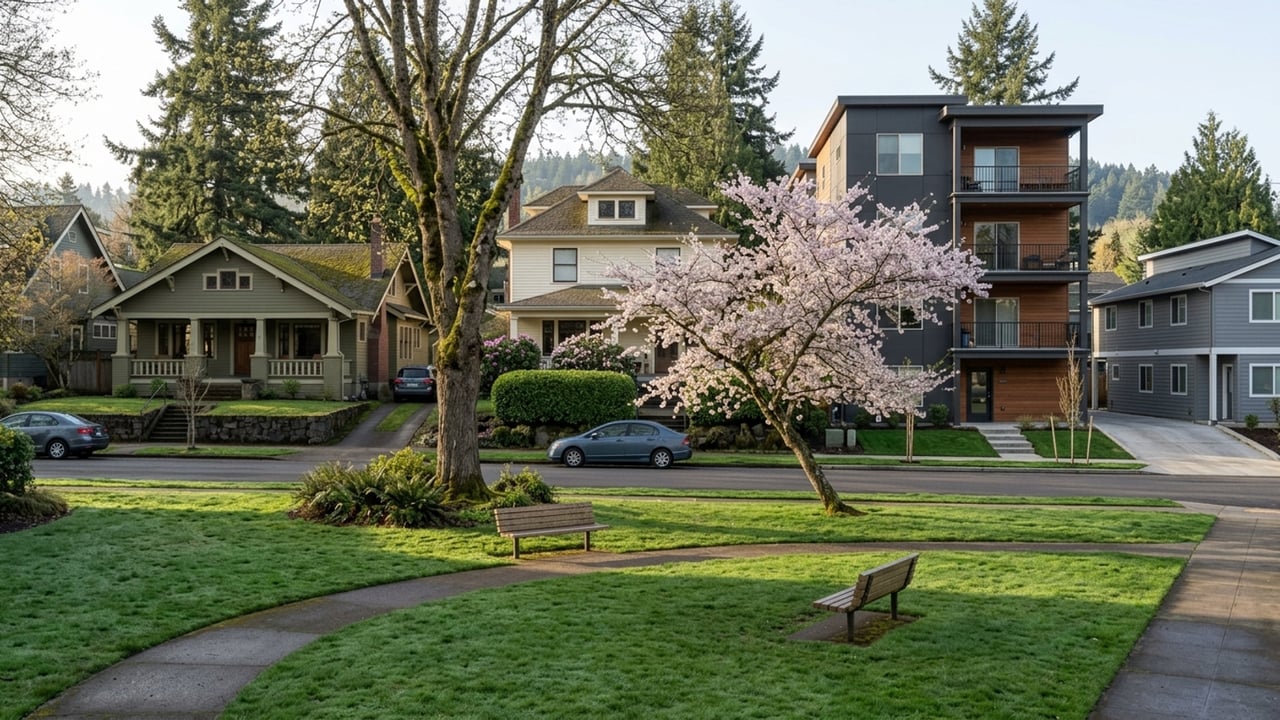
There's only so much outward expansion a city this size can do, so developers tend to focus on maximizing existing space within city limits. High-density residential projects and multi-unit buildings are the practical answer to housing a population this concentrated.
If you're relying on TriMet for your commute, location relative to major transit corridors matters a lot - probably more than square footage in some cases. It's worth mapping out proximity to those routes and to employment centers before you get too attached to a specific property.
Frequently Asked Questions
What is the current population of Portland?
According to the U.S. Census Bureau's most recent estimate from July 2025, Portland's population was 635,109 residents. That makes it the largest city in Oregon and the 28th largest in the nation.
Is Portland growing or shrinking?
It's shrinking slightly right now. After growing 11.8% between 2010 and 2020, the population has declined about 2.7% from its 2020 peak of 652,503 residents.
How does population growth affect the Portland housing market?
Population changes feed directly into housing demand and inventory levels. The recent dip in population has coincided with active listings running higher than 2023 and 2024 levels - but homes are still selling in a median of 25 days, so don't mistake "more listings" for "soft market."
Where is Portland located?
The city covers 133.5 square miles of land situated along the Willamette River. Anyone researching the location of Portland, Oregon, will find it serves as the state's largest city and the 28th largest in the United States.