Portland, OR sits in the northwestern corner of Oregon, right at the confluence of the Willamette and Columbia rivers. As the state's most populous city, it anchors a large metropolitan region that stretches across county lines and even reaches over the state border into Washington. Buyers moving to the Pacific Northwest often focus on this area for its distinct neighborhoods and access to outdoor recreation.
Knowing exactly where the city sits matters more than you'd think. It affects your commute times, your property tax bill, and which housing options even make sense to look at. The local market moves fast - available homes are spending roughly 19 days on the market right now - so understanding the regional layout before you start touring saves you a lot of wasted Saturdays.
The Geography of Portland, OR
Portland is primarily located in Multnomah County, where it serves as the county seat. The city limits are expansive, though, and small portions spill over into neighboring Washington County and Clackamas County. That multi-county footprint is something buyers miss all the time - a Portland address doesn't automatically tell you which county you're in, and that matters for property taxes and local services.
The city is divided into quadrants - though technically there are six distinct sections - split east and west by the Willamette River and north and south by Burnside Street. Getting around means crossing bridges and working a network of interstates that loop through and around the downtown core.
Counties and Regional Footprint
The bulk of the urban core and eastern neighborhoods fall within Multnomah County. Head toward the western hills or the southern edges and the borders start bleeding into Washington and Clackamas counties. Check the county designation on any listing you're seriously considering - local regulations and municipal services differ across those boundaries, and it's not always obvious from the address alone.
Primary Highways and Local Roads
Portland's interstates define how people move through this region. Interstate 5 runs north-south straight through the city, crossing the Willamette River via the Marquam Bridge. To the east, Interstate 84 - known locally as the Banfield Freeway - extends out toward the Columbia River Gorge.
If you want to bypass the center, Interstate 205 runs along the east side and provides direct access to the airport. Interstate 405, the Stadium Freeway, loops around the downtown area. One thing worth knowing before you fall in love with a commute: the most congested stretch in the region is a 9.6-mile run of I-5 from the Macadam Avenue/OR-43 exit to the North Tomahawk Island exit. During rush hour, what's normally an 11-minute drive can stretch to 19 minutes, with average speeds dropping to 30 mph. If that corridor sits between your office and your front door, factor it in early.
Reaching Nearby Cities and Regional Hubs
Portland connects easily to other major destinations in the Pacific Northwest. It's part of a larger regional network tied together by major interstates and rail lines, and Portland International Airport (PDX) sits within the city limits - served directly by the local light rail, so you can get there without touching your car.
The Drive to Seattle
Seattle is the nearest major city to Portland, about 173 miles to the north along I-5. Portland ranks as the second-most populous city in the Pacific Northwest, right behind Seattle, and the two share strong economic ties. The drive usually runs around three hours, depending on traffic through Tacoma and Olympia.
Plenty of professionals who split their time between the two cities use Amtrak's Cascades rail line, which runs along the I-5 corridor and connects both downtowns without the highway congestion. It's worth knowing that option exists.
Public Transit and Commuter Lines
Portland's public transit is operated by TriMet. The backbone of the system is the MAX Light Rail - five lines (Blue, Red, Yellow, Green, and Orange) and 93 stations spread across the region, connecting Portland City Center to surrounding hubs including Hillsboro, Gresham, Milwaukie, and Clackamas.
The MAX Red Line runs a direct connection from downtown and Hillsboro straight into Portland International Airport. Within the city core, the frequently used downtown stops include Pioneer Courthouse/SW 6th, Union Station, and the Rose Quarter Transit Center.
Neighboring Towns and Suburbs
The real estate market extends well beyond Portland's city limits, and a lot of buyers end up broadening their search once they see how the surrounding suburbs compare on price and commute. The metro area spans multiple counties and two states, so the options range pretty widely - from established tech hubs on the west side to historic towns and newer developments to the south and east.
Communities Just Outside the City Limits
Portland is bordered by Washington County to the west, home to Beaverton and Hillsboro. To the south and southeast, Clackamas County includes communities like Lake Oswego and Oregon City. On the east side, Multnomah County continues past Portland into Gresham and Troutdale.
Directly north across the Columbia River sits Clark County, Washington - and Vancouver, which offers a suburban alternative with different state tax structures. A lot of residents cross the I-5 or I-205 bridges daily to commute between Vancouver and Portland. It's a real consideration for some buyers, and not one to dismiss without running the numbers.
The Broader Portland Metro
Where you work should drive a lot of where you look. Someone with a job at one of the large employers in Hillsboro has a strong reason to stay on the west side and avoid crossing the Willamette River every day. A buyer who travels frequently might prioritize the east side near I-205 for faster airport access. The metro layout isn't complicated once you see it on a map - but it's easy to waste time looking in the wrong quadrant if you haven't thought through your daily routine first.
The Local Real Estate Market
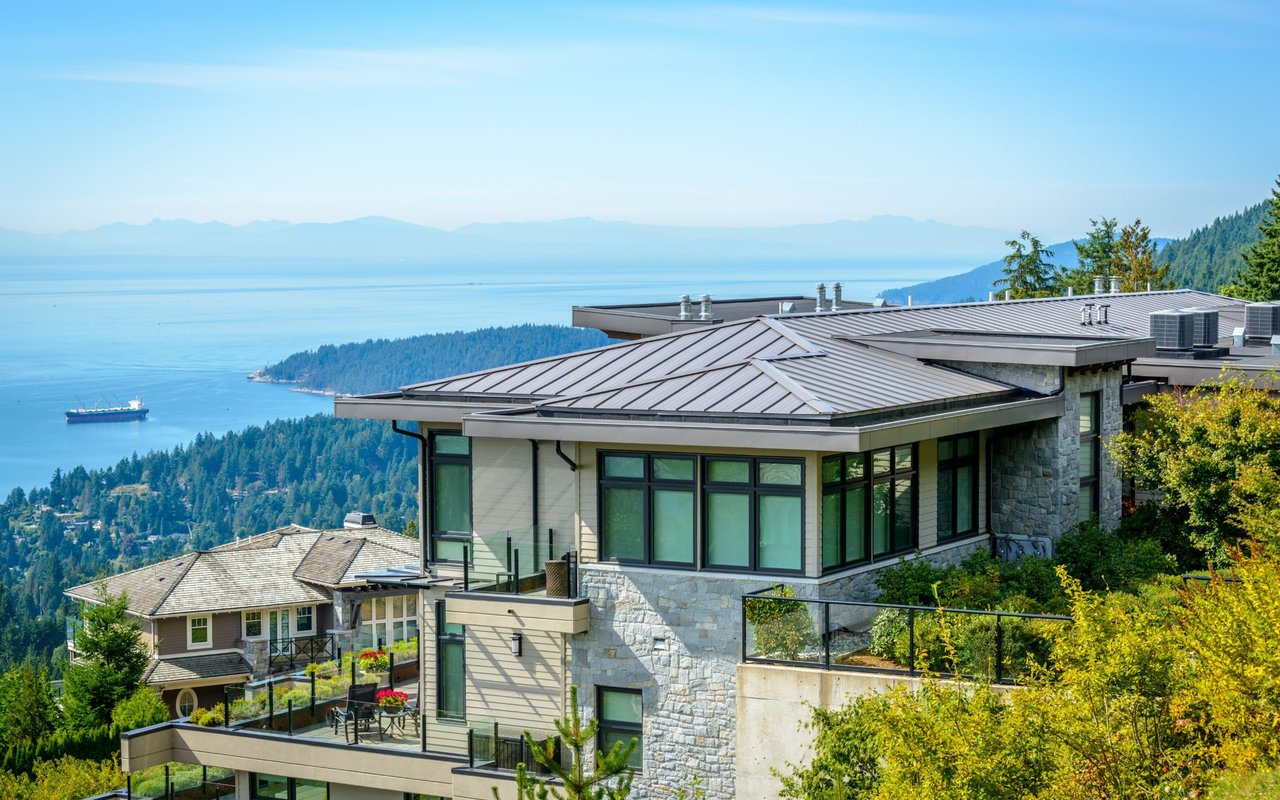
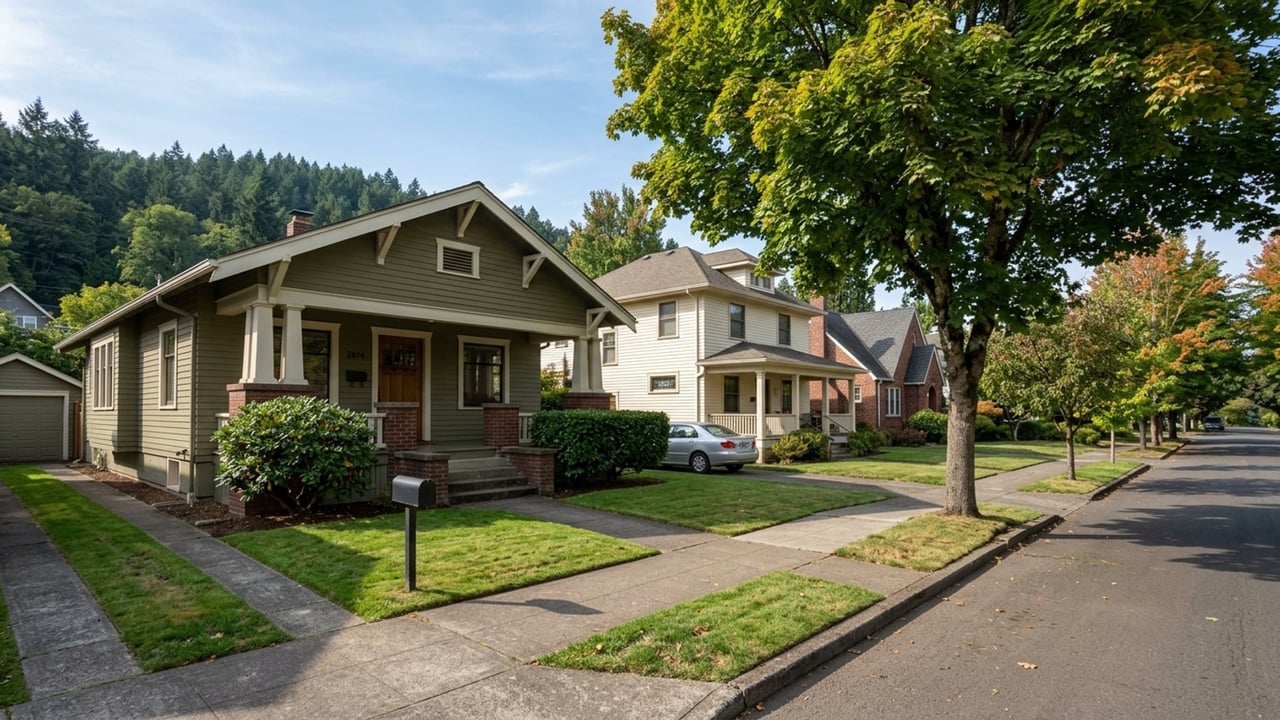
The median home price in Portland, OR is currently around $524,653. You'll find a mix of historic craftsman homes in the city center, mid-century ranches in the outer neighborhoods, and newer construction in the surrounding suburbs.
Properties are moving. Homes are spending roughly 19 days on the market, active inventory sits at about 2,215 homes - representing roughly three months of supply - and over 2,200 homes have sold recently. Homes are generally selling near or slightly above list price, so this isn't a market where you have the luxury of a slow decision.
That competitive reality is also why it helps to look at the full picture early. Comparing Portland listings against options in Beaverton, Gresham, or Vancouver can show you where your budget goes furthest - and a local agent who knows all three sides of that market is going to be a lot more useful than one who only works one county.
Frequently Asked Questions
What county is Portland in?
Portland is primarily located in Multnomah County, which also serves as the county seat. However, small portions of the city limits extend into neighboring Washington County and Clackamas County.
How far is Portland from Seattle?
Seattle is the nearest major city to Portland, located about 173 miles to the north. You can get there by driving directly up Interstate 5.
What towns are near Portland?
Portland borders several major suburbs across three Oregon counties. Beaverton and Hillsboro sit to the west in Washington County, Lake Oswego and Oregon City are to the south in Clackamas County, and Gresham and Troutdale lie to the east in Multnomah County. Vancouver, Washington is directly north across the Columbia River.
How do home prices in Portland proper compare to the surrounding Oregon suburbs?
The median sale price for the Portland area is currently around $524,653. Buyers often look at bordering communities like Beaverton, Hillsboro, or Gresham to see how their budget compares to listings within the city limits.
How is Portland, OR geographically divided when searching for real estate?
The city is split east and west by the Willamette River. It also extends across multiple counties - primarily Multnomah, with small sections in Washington and Clackamas counties - so the county designation on a listing matters.
What are the tax differences when buying a house in Portland, OR versus across the river in Vancouver, WA?
Vancouver sits in Clark County, Washington, directly across the Columbia River from Portland. Buyers looking in Vancouver fall under Washington's tax jurisdictions, while Portland buyers are subject to Oregon state taxes and their respective county taxes.