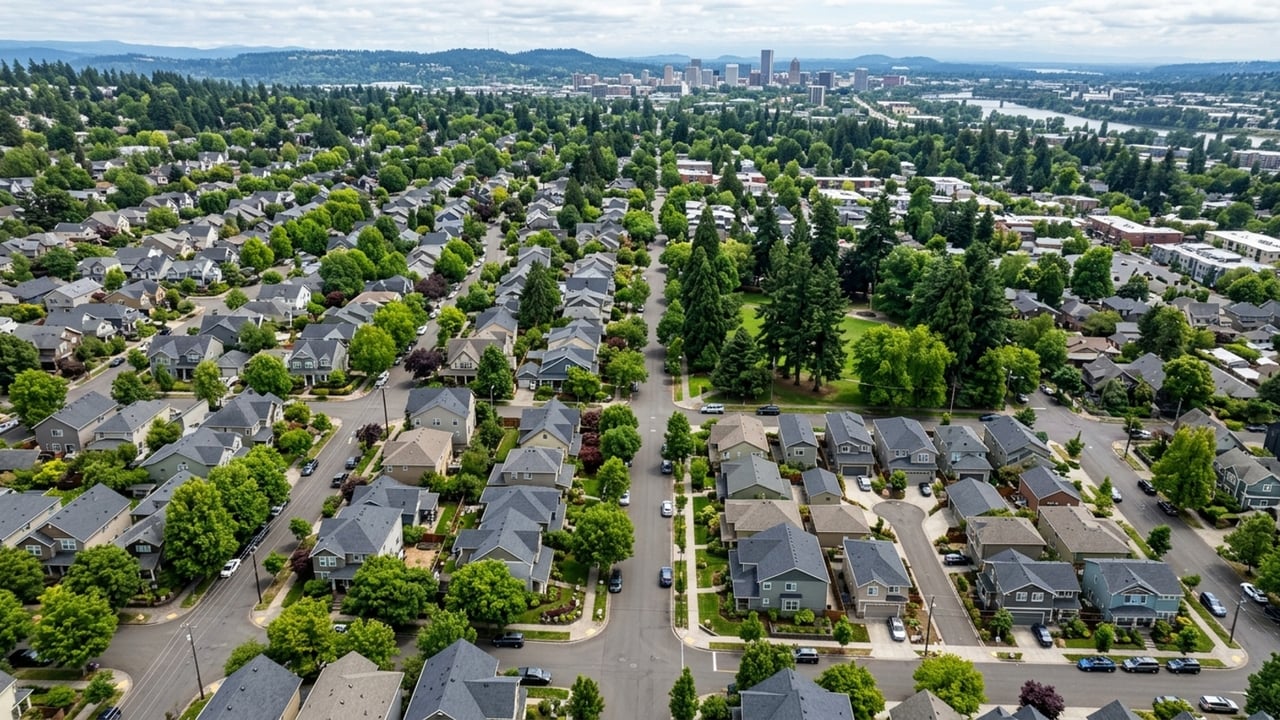
Portland's real estate market doesn't wait around - homes sell in a median of just 10 days, with a median sale price around $561,525. If you want to become a real estate agent in Portland, OR to guide buyers and sellers through those transactions, your first move is getting licensed through the Oregon Real Estate Agency (OREA).
One thing that trips people up before they even start: Oregon doesn't issue salesperson licenses. Everyone begins as a broker. So when you sit for your first exam, you're taking the Oregon real estate broker exam - not a salesperson exam like most other states require.
What to Know About the Oregon Real Estate License
OREA regulates all real estate licensees in the state and handles licensing. For the actual test, they contract with a third-party provider, Psychological Services, Inc. (PSI), to administer it.
A passing score lets you represent clients in property transactions anywhere in Oregon. To give you a sense of what you're stepping into: Portland saw roughly 713 homes sold in a recent month, with inventory sitting around 2,025 available properties. There's work to do out there.
Requirements to Take the Exam
Before you can schedule anything with PSI, OREA requires proof that you've met their education and experience benchmarks. You can't register without it - there's no workaround.
What those requirements actually look like depends on which license tier you're going for. Entry-level brokers and Principal Broker candidates are on different tracks entirely.
Prior Real Estate Experience
If you're starting fresh, good news: entry-level broker applicants don't need any prior real estate experience. You can begin the process right now.
Upgrading to an Oregon Principal Broker license is a different story. That application requires three years of active licensed real estate experience as a broker or salesperson before you're eligible for that exam.
Pre-License Coursework
Broker applicants must complete 150 hours of pre-license education through an approved provider before sitting for the exam. Those 150 hours aren't a single course - they're broken into seven specific subjects: 30 hours of Real Estate Law, 30 hours of Real Estate Finance, 30 hours of Oregon Real Estate Practices, 20 hours of Real Estate Brokerage, 15 hours of Contracts, 15 hours of Agency, and 10 hours of Property Management.
What the Test Covers
The Oregon broker exam is 130 questions total, and you get 195 minutes to complete it. PSI splits the test into two sections - national and state - administered back-to-back in the same appointment. You need at least 75% on both sections to pass. Not an average. Both.
The National Section
The national portion is 80 questions, with 120 minutes to complete it. It covers general real estate principles that apply across the country - property ownership, financing, valuation, general contract law. Most candidates find this half more intuitive.
The State Section
Fifty questions, 75 minutes. This is where Oregon gets specific - OREA administrative rules, state statutes, agency relationships, local property management laws, and state-specific record-keeping requirements. It rewards candidates who've actually memorized the details, not just understood the concepts.
How to Register and Schedule Your Test
The exam fee is $75, paid directly to PSI when you schedule. You can register online through the PSI website or by phone. Once OREA approves your education records, PSI sends you an eligibility notice with instructions for selecting your test date.
In the Portland, OR area, the main PSI testing center is on NE Sandy Blvd, set up as a standard office park. If you're coming from further south, there's also a testing location in nearby Wilsonville.
Tips for Passing on Your First Try
Think of your 150 hours of coursework as the floor, not the ceiling. Dedicated exam prep software that drills practice questions in a timed environment is worth it - the format of the actual test rewards people who've practiced under pressure, not just people who've read the material.
Put extra study time into Oregon's state-specific laws and OREA administrative rules. The national section concepts tend to click more naturally. The state section - agency rules, property management statutes - requires actual memorization.
Plan to arrive at the NE Sandy Blvd or Wilsonville testing center at least 30 minutes before your appointment. Check in, lock up your personal items, and give yourself a few minutes to settle before the clock starts.
Frequently Asked Questions
How much does it cost to take the real estate broker exam in Oregon?
The exam fee is $75, paid directly to PSI when you schedule your testing appointment online or by phone.
Where are the approved testing centers to take the broker exam in the Portland area?
The primary PSI testing center in Portland is located in an office park on NE Sandy Blvd. There's also an approved testing location in nearby Wilsonville for candidates coming from south of the city.
How many hours of pre-license education are required before I can sit for the Oregon exam?
You need 150 hours of approved pre-license coursework completed before you're eligible. That breaks down into specific hourly requirements across subjects including Real Estate Law, Finance, Contracts, and Agency.