If you are thinking about listing your home this year, the first question on your mind is probably, "When do I actually get to move?" It is the most common question I get over coffee with clients. You need to coordinate movers, job transfers, or the purchase of your next place, so having a realistic timeline is everything.
Here is the short answer: As of early 2026, homes in Portland are taking an average of 42–55 days to go from "Active" to "Pending."
However, that is just the time it takes to get an offer accepted. It does not account for the prep work before you list or the escrow period after. When you look at the total picture—from the day we stick the sign in the yard to the day you hand over the keys—you are looking at a total market time of roughly 80 to 90 days.
It is also important to remember that we are in a balanced market right now. Inventory is hovering around 3.7 months, which means buyers have options. We aren't in the frenzy of a few years ago where homes vanished in a weekend, but well-priced homes in desirable neighborhoods are still moving efficiently.
Current Portland Market Stats: Speed of Sale in 2026
To plan your life, you need to look beyond the averages. The speed of the market in 2026 is steady, but it varies heavily depending on what you are selling and where. Let’s break down the numbers you need to know.
Average Days on Market (DOM): If you were following real estate news back in 2021 or 2022, you might remember homes selling in 4 days. You need to reset that expectation. In the current 2026 market, a DOM of 45 days is healthy and normal. It doesn't mean something is wrong with your house; it just means buyers are taking their time to do due diligence.
Inventory Levels (Months of Supply): Right now, Portland is sitting at about 3.0 to 3.7 months of inventory. In plain English, this means if no new houses came on the market, it would take about three and a half months to sell everything currently listed. This is the definition of a "balanced" market. It is not a runaway seller's market (under 1 month) or a depressed buyer's market (over 6 months). It is a fair playing field.
Price Band Differences: Not all price points move at the same speed. Entry-level homes—typically those under $500,000 in Multnomah and Washington counties—are still the fastest segment of the market because demand is highest there. Once you get into luxury territory (homes over $800,000 or $1,000,000), the buyer pool shrinks, and it is normal for those properties to sit on the market a little longer.
The Rain Factor: Best (and Worst) Months to Sell in Portland
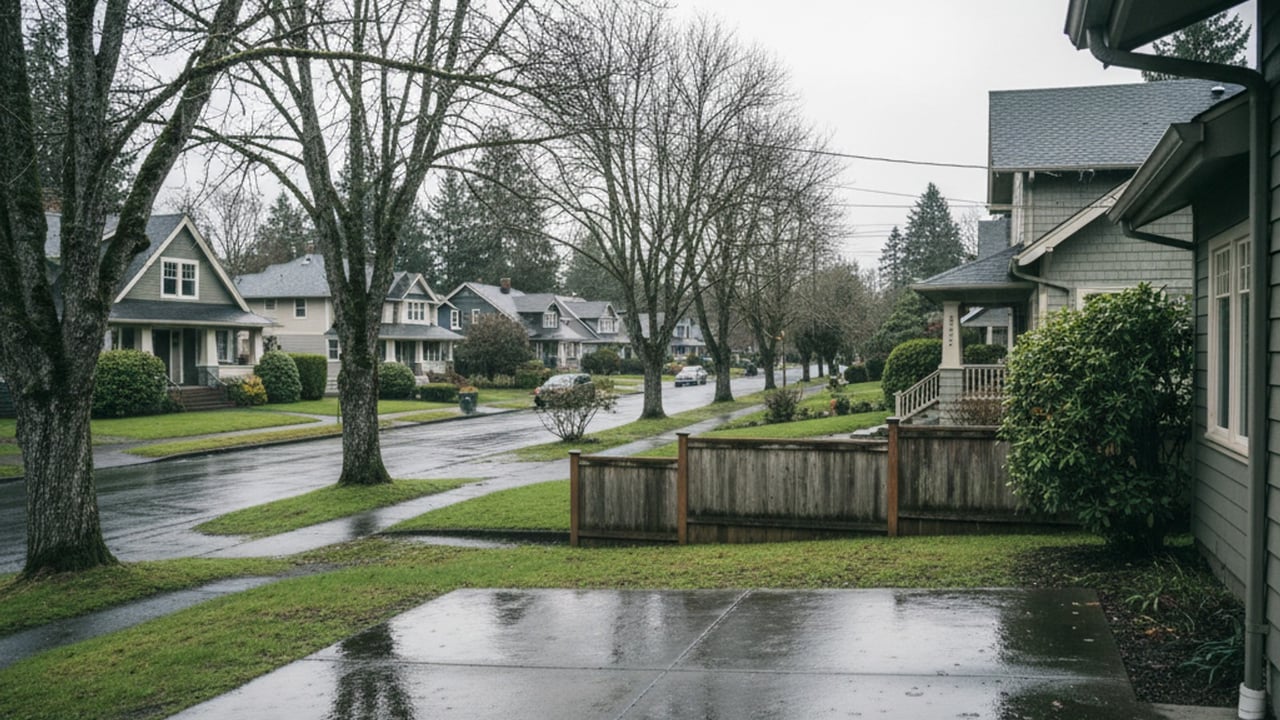
Real estate is local, and in the Pacific Northwest, the weather dictates the market more than almost anything else. Our distinct rainy season has a massive psychological impact on buyers.
The "Magic Window" (Late February – May): Historically, this is the prime time to list. Once the Super Bowl is over and the first crocuses start popping up, buyers come out of hibernation. The days get longer, and the inventory usually hasn't peaked yet. If you list during this window, you are hitting the market when buyer energy is highest.
Summer (June – August): Summer is still a great time to sell, but the dynamic changes. You have high buyer traffic, but you also have peak competition because everyone else had the same idea to list in June. Plus, vacations can slow down the closing process.
The "Dark" Months (November – January): This is the toughest time to sell in Portland. When the sun sets at 4:30 PM and it’s raining sideways, curb appeal takes a hit. Moss looks greener, driveways look wetter, and interiors feel darker. Days on Market typically spike during these months.
If you absolutely must sell in the winter, you have to overcompensate. Your lighting game needs to be on point, and your home staging checklist should focus on making the home feel warm and cozy—think "hygge" vibes to combat the gloom.
3 Factors That Dictate Your Timeline
While you can't control interest rates or the rain, you have total control over three huge variables. These are the levers we pull to speed up a sale.
1. Pricing Strategy
This is the single biggest factor. In 2026, buyers are savvy—they have access to all the same data we do. If we try "aspirational pricing" (listing high to see if someone bites), the listing will likely stagnate. The most effective strategy right now is pricing slightly below market value to induce a "bidding effect." A fresh listing that looks like a deal generates urgency. A listing that sits for 60 days because it was overpriced by $20k eventually sells for less than it would have if priced right from day one.
2. Home Condition & Staging
Labor and material costs for renovations are still very high in Oregon. Because of this, today's buyers are shying away from fixer-uppers. They want "move-in ready." A home that needs new carpets, paint, and a roof will sit much longer than a pristine home, even if the price reflects the work needed. Investing in minor repairs and professional staging is non-negotiable if speed is your goal.
3. Location Nuances
We are seeing a divergence in the market between property types. Detached single-family homes in hot neighborhoods like Laurelhurst, Sellwood, or Beaverton are moving briskly. However, downtown condos are seeing longer Days on Market. If you are selling a condo or a property in a slower outer area, you need to budget for a slightly longer timeline.
The Full Selling Timeline: Listing to Closing
So, how does this look on a calendar? If you decide today that you want to sell, here is a realistic schedule of how the next few months will look.
-
Prep Phase (1–4 Weeks): Before we list, we are prepping. This includes decluttering, deep cleaning, and completing necessary repairs. In Portland, professional photography is vital—we need to make your home look bright even if it was gray outside when we took the photos.
-
Active Market Phase (40–60 Days): This is when your home is live on the RMLS. We are hosting open houses and managing private showings. If we don't have an offer by day 21, we usually sit down to review feedback and discuss a price adjustment.
-
Under Contract / Escrow (30–45 Days): Once you accept an offer, the clock starts on escrow. This is where local nuances come in. In Portland, almost every buyer will perform a Sewer Scope and Radon Testing in addition to the standard home inspection. These specific inspections can sometimes uncover issues that require negotiation, which can push the timeline out a week or two.
-
Total Estimated Time: From the moment you think "I want to sell" to the moment the money is wired to your account, plan for 3 to 4 months.
Frequently Asked Questions
What is the best month to list a house in Portland?
Statistically, late April or May is often the best time to list. You catch the market when buyer demand is peaking, the weather is improving (making your yard look better), and families are looking to settle before the next school year.
Are homes selling fast in Portland right now?
The market is currently "steady" rather than "fast." With an average time to pending of 42–55 days, homes are selling at a healthy pace, but we aren't seeing the chaotic speed of 2021 where homes sold in hours.
How does the "months of inventory" affect my sale?
"Months of inventory" tells us who has the leverage. Less than 3 months is a seller's market; more than 6 months is a buyer's market. With Portland currently sitting around 3.7 months, the market is balanced, meaning you need to price correctly and present well to attract attention.
Do I need a sewer scope to sell in Portland?
While you aren't legally required to do one to list the home, 99% of Portland buyers will pay for one during the inspection period. If the scope reveals a broken line or root intrusion (very common here), you will likely have to fix it before closing. Many sellers do a pre-inspection scope so there are no surprises later.